

The 4 Most Common Hockey Injuries and How We Can Help You!
The Most Common Hockey Injuries And How Physiotherapy Can Help YOU!
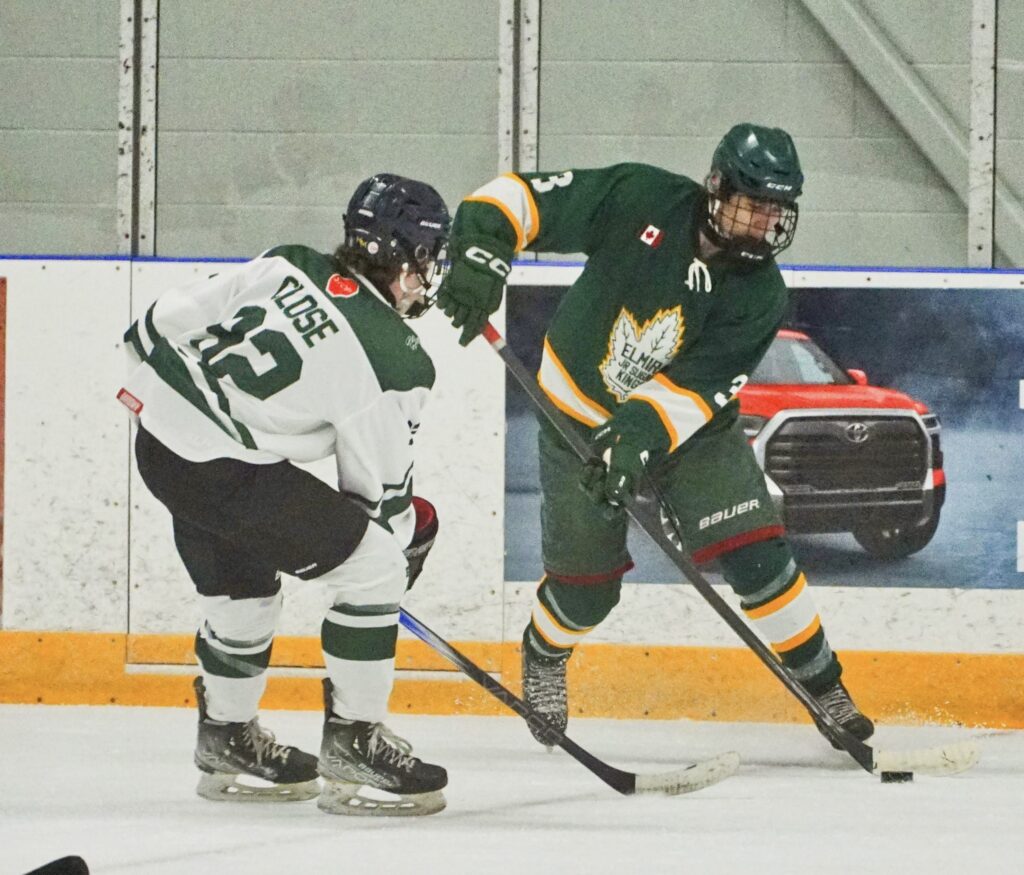
Hockey is a fast-paced, intense sport that demands speed, agility, and physicality, making players prone to specific injuries, regardless of their skill level. While injuries can be discouraging and intimidating, physiotherapy plays a crucial role in both recovering from and preventing them. In this post, we will explore the top four most common hockey injuries, and how physiotherapy can get you back on your skates!
Well What Are The Most Common Hockey Injuries?
1. Concussions
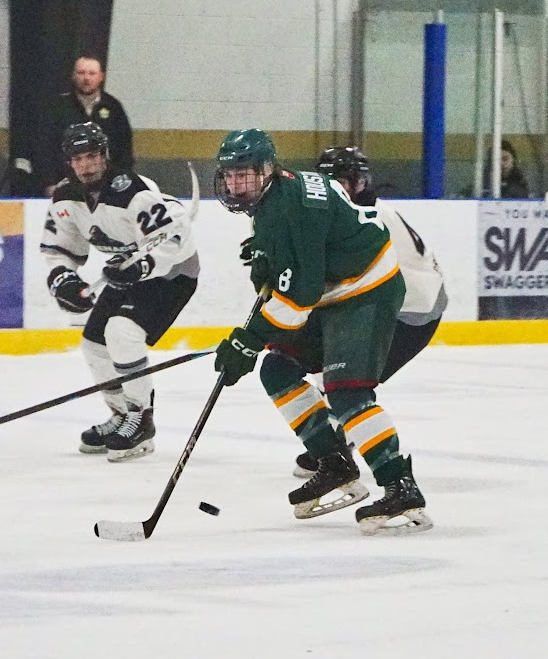
How might a hockey player get a concussion?
- A flying puck that hits a player in the head.
- A players head makes contact with another players elbow or shoulder, or the boards during a body check.
- Hitting their head directly on the ice.
- An unexpected bodycheck or fall, where there is sudden neck or head movements.
What is a concussion?
A concussion is a mild traumatic brain injury that can have very serious effects on brain function. Concussions occur when your brain moves around in your skull due to a quick sudden movement of the body or a direct hit to the head.
The scary thing when it comes to concussions is that we can’t physically see the injury. Signs and symptoms to recognize a concussion include: headaches, vision changes or sensitivities, nausea, mood changes, dizziness, as well as a long list of other symptoms.
Fact vs Fiction: A hockey player does not need to lose consciousness to be diagnosed with a concussion.
How can physiotherapy help with my hockey concussion?
Physiotherapy can play a crucial role in recovering from a concussion. Treatment for a concussion consists of techniques to manage and resolve a variety of vestibular, visual, and cognitive symptoms. Manual therapy can assist with alleviating neck stiffness or pain and headaches. Additionally, exercises can improve balance and coordination post-concussion. Physiotherapists can guide hockey players through the return to play process. With a gradual step-by-step process and symptom monitoring we can ensure a safe return to the ice for the hockey player.
2. AC Joint Sprains
How might a hockey player sprain their AC Joint?
- Falling directly onto the ice and landing on your shoulder.
- Falling with your arm reaching out by your side trying to catch yourself.
- Directly hitting to your shoulder into the boards or colliding with another player.
These are all possible situations a hockey player might find themselves in on the ice. Everyone knows that body-checking is a vital part of hockey. Nevertheless, it is by far the most common way that a hockey player will injure their shoulders.
What is an AC joint sprain?
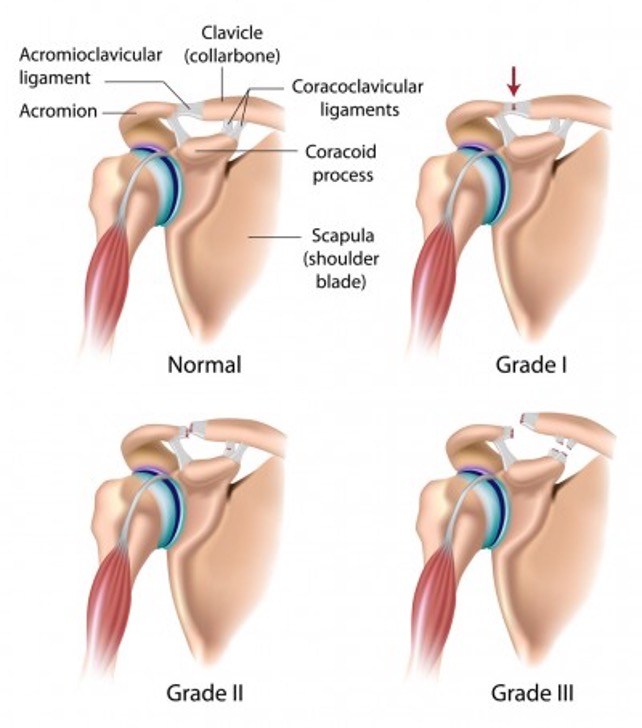
Your acromioclavicular (AC) joint is located in your shoulder. This is where the collarbone connects to a part of the shoulder blade called the acromion. The AC joint is held together and stabilized by multiple ligaments, including the acromioclavicular ligament and the coracoclavicular ligaments. With this being said, a sprain occurs at the AC joint when one or more of the ligaments that hold the joint together are damaged or rupture.
The most common signs and symptoms of an AC joint sprain are shoulder pain, swelling, bruising, an elevated collarbone and limited ability to move the shoulder.
There are Three grades of AC Joint Sprains:
Grade One: Mild sprain of the acromioclavicular ligament with no displacement of the collar bone. The ligament is irritated and slightly stretched, which will cause pain and tenderness over the area.
Grade Two: Moderate sprain and partial tearing of the acromioclavicular and coracoclavicular ligaments. There is some displacement of the collar bone, which will lead to decreased ability to move the arm and increased pain.
Grade Three: Complete rupture of the acromioclavicular and coracoclavicular ligaments. There will be visual deformity of the shoulder/collarbone and severe pain.
How can physiotherapy help with my AC joint sprain?
Physiotherapy can help reduce pain and inflammation within the AC joint initially after the injury occurs. Manual therapy can release tight muscles and improve range of motion of the shoulder. Also, the exercises your physiotherapist gives you strengthen the muscles around the shoulder, playing a vital part in preventing future AC joint irritation or ruptures.
3. High Ankle Sprains
How might a hockey player sprain their ankle?
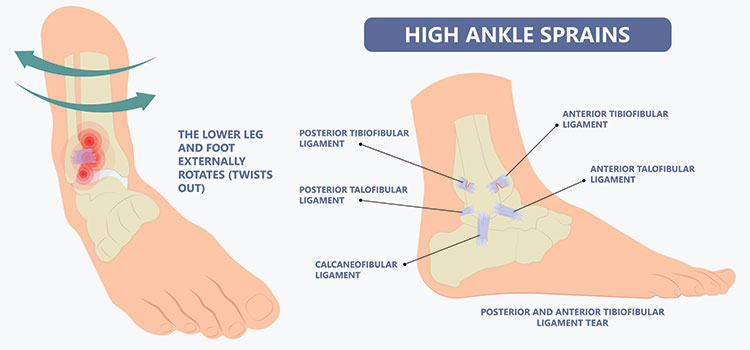
Ice skates are very stiff and they support for players feet and ankles while players skate. However, ice skates restrict hockey players’ ankle range of motion. This means when a player falls or collides with another player and their foot turns the wrong way or suddenly twists, the ankle has less room to move in the skate. These sudden movements place a lot of force through and upset the ligaments in hockey players’ ankles.
You might recognize the signs and symptoms of a high ankle sprain as swelling, difficulty weight bearing, increased pain with ankle movement, and bruising around the ankle.
What is a high ankle sprain?
Unlike a ‘typical’ ankle sprain where you roll or twist your ankle in a funky way, a high sprain involves stretching or tearing of the ligaments that hold our two leg bones, the tibia and fibula together. These ligaments are located higher up in the ankle joint so they can effectively transfer forces through the foot up to the leg as we move. If there is damage to the ligaments, they might not be able to effectively hold the two bones together and force will not be transferred properly, causing significant ankle pain.
How can physiotherapy help with my sprained ankle?
Initially post ankle sprain, physiotherapy can help reduce swelling and inflammation in the ankle via manual therapy and laser therapy. Once the pain begins to decrease, a physiotherapist will introduce exercises to improve ankle and foot flexibility. As healing of the ankle ligaments progresses, exercises will shift to focus on strengthening the ankle and foot. Strengthening muscles will provide extra stability to the ankle as the ligaments are healing. One more thing when returning to the ice that can be helpful is having the physiotherapist tape the previously injured ankle to provide support.
4. Hamstring Strain
How might a hockey player strain their hamstring?
- Sudden and quick starts and stops on the ice.
- Reaching out to grab a loose puck with their leg extended behind them.
- Poor or no warmup before getting onto the ice.
In any of these situations, a hockey player may overstretch or overload the hamstring muscles, causing tears or strains in the muscle fibers. Proper warm-up, stretching, and conditioning can help reduce the risk of this common hockey injury.
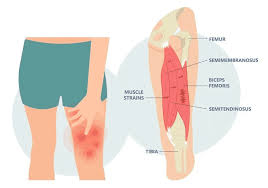
What is a hamstring strain?
Your hamstrings are made of a group of 3 muscles in the back of your thigh. These muscles are responsible for bending your knee and extending your hip. A strain happens when one or more of these muscles is overloaded or overstretched, causing some of the muscle filers to tear. This is an injury commonly referred to as a “pulled hamstring”.
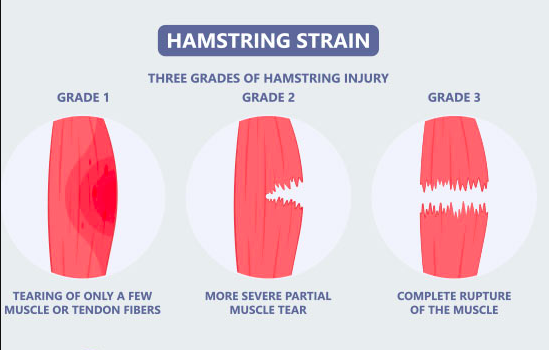
There are Three grades of hamstring strains:
Grade One: Only a very small number of muscle fibers are torn or irritated. This is a very mild injury to the hamstrings and may result in some discomfort but mobility typically isn’t limited.
Grade Two: Several of the muscle fibers are torn. This is a moderate injury to the hamstrings. The player might experience sharp pain, leg weakness or difficulty walking.
Grade Three: This is a complete tear of the hamstring muscle. This will result in severe pain, swelling and loss of function of the leg.
How can physiotherapy help with my hamstring strain?
Physiotherapy can help reduce pain, promote healing, and restore function post hamstring strain. Early stages of treatment may include gentle stretching to maintain hamstring flexibility and manual therapy to release surrounding tight facia or muscles. In the later stages of recovery, strengthening exercises may be provided to rebuild the hamstrings strength so the player is strong and ready to get back on the ice.
FAQs Regarding Common Hockey Injuries
How do I know if I need to see a physiotherapist for my hockey injury?
You should see a physiotherapist for your hockey injury if the pain persists longer than a few days or worsens overtime. If you’re experiencing limited movement or having difficulty using the injured area, a physiotherapist can help restore function and mobility. Additionally, if you feel instability or weakness in the injured area, physiotherapy can help strengthen and stabilize the injury. Early intervention can speed up recovery and help you safely return to the game!
What are common signs or symptoms of a hamstring strain?
A hamstring strain, typically presents with sudden sharp pain in the back of the leg. Individuals may experience tightness or tenderness in the affected muscle. Swelling or bruising may also appear in the days following the injury. It’s important to rest the injured muscle, apply ice to reduce swelling, and seek professional treatment to ensure proper healing and avoid further injury.
What should I do if I hit my head while playing hockey?
If you hit your head while playing hockey, the first thing you should do is stop playing and assess how you’re feeling. If you experience any unusual symptoms, such as a headache, dizziness, or nausea, it’s important to stop all physical activity for the rest of the day. After a head injury, rest should be prioritized, and you should monitor for any changes in symptoms. A doctor or physiotherapist should evaluate you as soon as possible to determine whether or not you have a concussion. Returning to the ice should be gradual and only after receiving clearance from a healthcare professional.