

I Didn’t Fall… So Why Am I in Pain?

A 7-Step Countdown of How Pain Builds Up Over Time (and Why Physiotherapy Works)
“Why am I in Pain?”
“I didn’t fall”
“I didn’t twist anything”
“I’m sure I didn’t do anything”
These are some of the comments people typically make as they enter into a physiotherapy clinic.
A recent patient expressed to me that he woke up one morning with severe pain in his right shoulder, such that he was unable to lift his coffee mug. He had no known injury or accident at the gym; no apparent cause for the pain other than “it just hurt“.
However, what is important for many individuals to understand about pain: It is not usually something that comes on out of the blue.
Many times it develops slowly, almost silently, until the body reaches a point where it can no longer compensate for the pain.
According to the World Health Organization, musculoskeletal conditions such as back pain, neck pain, and arthritis affect hundreds of millions of people worldwide.
Let’s go over how this really occurs.
The Countdown: How Pain Builds Up Over Time
#7. It Starts With Something Small You Don’t Notice
Most pain stories begin with something other than the presence of pain. They typically begin with some kind of subtle feeling, for example:
- Stiffness in the hips when you exit your car;
- A tightness in the shoulders when you reach overhead;
- Discomfort or pain in the neck after working for hours on a computer; or
- Instability in one knee as you go downstairs (or climb up).
Essentially, nothing that appears to be a direct result of an injury.
We usually overlook it because it doesn’t feel significant.
But many times, those slight variations in movement or sensation are signs that the body is not functioning the way it needs to in terms of mobility and support.
#6. Your Body Adapts by Compensating
The body is an extremely resourceful problem-solver.
When one area of the body can’t do its job appropriately, other areas will compensate for that area’s lack of function.
Examples include:
- Poorly controlled scapulae (shoulder blades) causes overworking of the muscles of the neck.
- Limited ankle mobility causes increased loading on both the knee and hip joints.
Compensation is the term used to describe this process.
It starts out as a successful strategy.
The body continues to allow you to move around and live your daily life, regardless of how some underlying aspect(s) may be operating less than optimally.
#5. The Compensation Becomes Your “New Normal”
Over a long period of time, those “workarounds” can become second nature.
It’s possible you don’t even realize your body has created new habits in how you move.
Some examples could be:
- Always sitting with your weight shifted onto one leg.
- Always tensing up your neck when you lift something, reach into a cabinet, etc.
As there is typically no significant pain, it’s easy to conclude that all is well.
However, in many cases, some joints and muscles will be working harder than they should be, because they were never intended to do this extra amount of work.

#4. Repetition Turns That Shortcut Into Irritation
Movement is repetitive in life.
We sit. We walk. We carry bags. We lift groceries. We scroll through our phones. And we work at our desks.
When movement patterns are imbalanced, this repetition becomes the mechanism by which they become amplified.
Day after day, the same muscles and joints absorb an increasing amount of stress due to the repetition.
Examples of these include:
- Sitting/standing at your desk for long periods
- Exercising with poor mechanics
- Sleeping in awkward positions
Eventually, the tissues will start to feel irritable (not damaged) as they have absorbed an excessive load.
#3. Your Tolerance Drops (Even If Nothing Changed)
This is where many are surprised by this process of pain.
At times, you may find yourself experiencing new levels of pain or increased discomfort despite having made no changes to your daily routine.
Why does this happen?
Your body has a varying degree of recovery potential. Factors (i.e., stress, insufficient sleep, illness, lack of activity) can reduce your body’s capacity for handling the load it previously tolerated with ease.
Now, you begin to feel discomfort from movements which once did not cause you to experience any type of difficulty.
#2. One “Normal” Movement Becomes the Final Straw
Then one day something small happens and you find yourself bending down to pick up laundry or reach into the back seat of your car or turn your head while driving or roll over in bed and suddenly… pain.
That’s when people say “i didn’t even do anything” but truth be told, that movement wasn’t the cause it was just the last drop in the bucket.
#1. Pain Appears and the Body Starts Guarding
Once you feel the pain, your body goes into protection mode in order to avoid further injury.
Your muscles contract or tighten. Movement becomes less flexible due to increased stiffness.
The longer you go without moving, the more likely you are to avoid those same movements again.
This protective response is a common and natural occurrence; however, this response will continue to be active as long as it continues, and this may result in continued discomfort.
Less movement can cause more stiffness, which may result in even more discomfort.
Why Physiotherapy Helps Even Without an Injury
Physiotherapy is not simply a matter of treating an injury; physiotherapy is about discovering why the body’s tissues broke down.
To that end, a physiotherapist views the total body system; i.e., how the joints are moving, what the muscles are doing for you, and how the body distributes weight during typical day-to-day activities.
Some treatments used by physiotherapists may be:
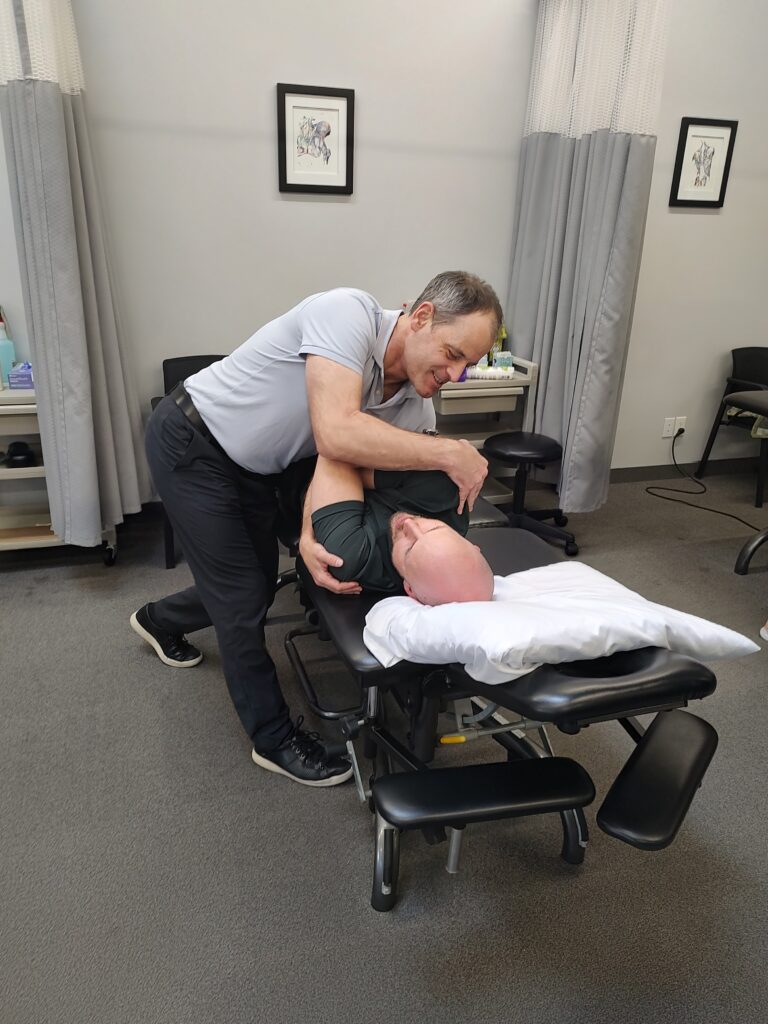
- Specific exercises to rebuild the strength and stability of the muscles around specific joints
- Mobility treatment to allow joints to move again if they have become stiff
- Hands on treatment to relieve tightness, and improve function
- Movement re-education to eliminate unwanted movement habits (compensation)
Physiotherapy is not merely a temporary solution to the alleviation of pain. Rather, the goal of physiotherapy is to provide balance to the body so the same issue does not continue to occur.
Physiotherapy has been proven to increase mobility, decrease discomfort, and enable individuals to resume their normal activity levels, without the need for medication or surgical intervention in most instances.
The Takeaway
Sometimes the most painful thing isn’t a single event, it’s the accumulation of many smaller things.
When we are in an ongoing state of being slightly stiffer than normal or weaker than normal, as well as using our bodies to perform daily tasks in non-ideal ways, our bodies gradually accumulate stress.
Learning how to recognize this process will be powerful.
This way, your body may be able to function more effectively for longer periods of time without feeling pain.