

What is the truth about shoulder impingement and what really causes it?

So what is shoulder impingement?
It’s not just your shoulder!
In order to talk about shoulder impingement we first need to define “impingement” – this simply means the intrusion or interference of a space, in this case the shoulder joint. Our innovative care strategies at SOS Physiotherapy will help you find quick relief. You can also visit our other clinics at Kitchener, Waterloo, Elmira, Ontario, which might be near to your stay.
Quick Anatomy
Lets look at the shoulder! The shoulder joint is made up of 3 bones: the humerus (arm bone), the scapula (shoulder blade), and the clavicle (collar bone). There are then a number of structures that surround the joint to help it move and keep it in place. These include 4 muscles known as the rotator cuff, a muscle known as the biceps, and a number of bursa. Bursa are fluid filled sacs that cushion and protect the structures through movement.

Shoulder impingement syndrome is the irritation of those above structures, such as the rotator cuff tendons and bursa as they pass through the space in your shoulder, shown in the image below. This can be caused by a number of factors including posture, the way your neck and back move, and the strength of your muscles. Shoulder impingement often causes pain, weakness, and reduced movement of the shoulder.

Shoulder Impingement Success Story
As a physiotherapy student I have seen a number of shoulder impingement presentations with one recent case that stuck out in my mind. They came to the clinic with a lot of shoulder pain and weakness after shovelling snow. It presented as sharp pain with difficulty lifting arms overhead and to the side. They had extreme difficulty even lifting a coffee cup and putting on deodorant initially!
After going through an assessment to gain an understanding about why this episode of impingement occurred, we found many factors contributing to their flare-up…. keep reading to find out what these may have been! With successful treatment including manual therapy, myofascial release, and exercise my patient was discharged with minimal pain and full function after 3 weeks!
“Stephen and Makenna (his student) were professional and exceptionally knowledgeable. They helped me recover from a shoulder injury quickly and provided me with exercises and stretches to prevent further injury from occurring. I very much appreciated that they went above and beyond to make recommendations with a ‘preventative lens’ so as to avoid future injury.”
Why is my shoulder impingement happening?
In a perfect world, your shoulder will not become painful with activities. In reality you should be able to shovel snow for an hour, go play tennis with friends, and do computer work without shoulder pain.
4 Reasons Poor Posture Causes Shoulder Impingement
- Slouched posture allows your shoulders and head to come forward to allow the chest muscles (pecs) to become tightened.
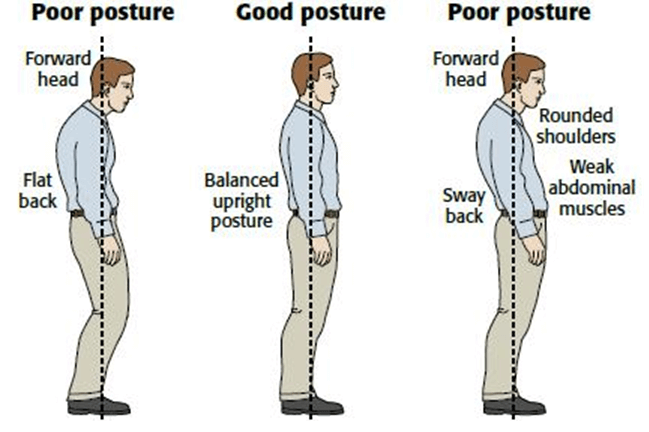
- Slouching does not use your back and scapular muscles to support your back and shoulders. This lets the muscles lengthen and weaken, so they become ineffective in supporting your back and shoulders with activities.
- Poor posture brings the humerus forward so it’s no longer centred in the joint allowing it to pull and compress surrounding structures.
- Slouched posture brings the head and neck forward, closing down the space around nerves in the neck which can lead to further pain, burning, tingling, numbness, and weakness in the shoulder and down the arm.
What could other causes of your shoulder impingement pain be?
- If there is tightness of your neck joints and muscles, it may cause irritation or compression on some nerves.
- Muscle imbalances – strong vs weak muscles can add to poor positioning of your humerus causing more compression in the area.
- Repetitive overhead motions of the arm like throwing sports and painting can further aggravate structures if they are already being impinged.
- Stiffness in your upper back can also lead to reduced motion of the shoulder leading to further restrictions
- Changes with aging can also narrow the space increasing your chance of structural irritation
How can I treat shoulder impingement?
Treatment of shoulder impingement syndrome should focus on prevention. Why? Because impingement occurs due to long term/repetitive irritation of the structures within the shoulder joint based on sustained postures and activities/movements we are doing within those postures. In order to treat shoulder impingement syndrome and prevent it from coming back we need to create long term habits. These habits include correct posture, frequent position changes or movement breaks, and exercise to help strengthen muscles surrounding the joint for support and stability. Prevention is key to maintaining strong, pain free shoulders without the development and recurrence of impingement syndrome.
Want to get rid of your shoulder pain and get back to your
enjoying your activities?
Here are 6 tips to help your shoulder impingement syndrome now!
- You need to have proper back support while sitting to keep yourself in a good position. Remember to keep your head and shoulders back and avoid slouching. Do this by tucking your chin and pulling your shoulder blades back. This includes at your desk, while driving, and when sitting on your phone or computer.
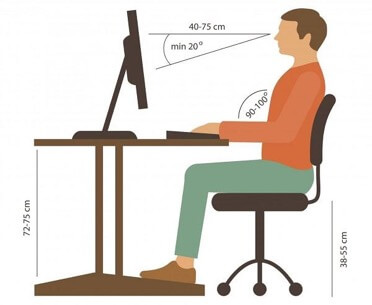
- Make sure your workstation works for you. Check that your desk and chair are at the right height. Your elbows should be bent to 90° so you are in a relaxed position while typing at the keyboard, you don’t want to be shrugging your shoulders up or slouching down. Your eyes should be level with your computer screen and your chair should have good back support as indicated above.
3. Take frequent movement breaks. Try not to be in one position for longer than an 30 minutes to an hour at a time, this includes sitting and standing! Set reminders for yourself to get up and move for 5 minutes if you are working at a desk for a long period of time.
4. Get that upper back moving. Often, we are lacking upper back extension and rotation as we are slouched forward most of the day. These can be done at your desk, standing up, or laying down on a foam roller.
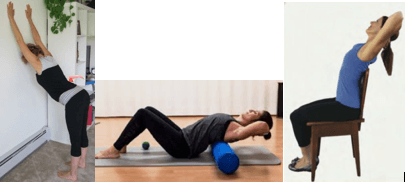
5. Strengthen the surrounding muscles! Here are a few simple exercises to get you started:
https://www.youtube.com/shorts/Uu3jgT1lSA0
6. Don’t be afraid to use ice or heat for pain relief! One isn’t better than the other it depends what works for you and feels good. 15-20 minutes can be effective for short term pain relief. Our highly-trained physiotherapist at SOS Physiotherapy clinics in Kitchener, Waterloo, Elmira, Ontario- will create a therapy treatment plan that is best for you.
Shoulder Impingement Summary
Shoulder impingement can present as a collection of symptoms due to a number of factors including posture, muscle weakness, and poor mobility. It is important to recognize the postures you may be in and what may be causing them for example being on your phone or working at your desk. In my patients example they had put load through their shoulder while in a poor slouched position shovelling snow. This led to further aggravation of the already impinged structures due to chronic poor positioning.
We were able to improve shoulder range of motion, improve thoracic mobility, lengthen shortened muscles like the pec and strengthen weak muscles like the rotator cuff. This was done through manual therapy, exercise, and education to get them back to full function. If you think you are suffering from shoulder impingement try some of the above techniques but know that physiotherapy is always here to help with hands-on treatment and an individualized exercise plan to help get you back to the activities you like to do. Remember prevention is key!
Leave your email in the link above and we will contact you to book a time that works for you to come in and see our Physiotherapist! If you are looking to stay in the comfort of your own home that is no problem, we can have our Physiotherapist contact you over the phone for a consultation at the earliest of your convenience. Virtual physiotherapy can be just as effective and can still help with any shoulder related problems.
FAQ
How do you fix a shoulder impingement?
To fix your shoulder impingement you must fix your posture! If this stress goes on for a prolonged period of time it will permanently damage your rotator cuff tendons.
How long does it take for subacromial impingement to heal?
This will depend on a number of factors including severity, age, previous injuries, and how long the impingement has been going on for. Mild cases can be resolved in 3-4 weeks while more severe cases may take 4-6 months. Strengthening and mobility exercises are often required for long-term relief and recurrence prevention.
What happens if shoulder impingement is left untreated?
If left untreated this can lead to more serious conditions that will involve a longer recovery/rehabilitation process including muscle tears of the rotator cuff or biceps tendon and further inflammation of the bursa.