

Avoiding Chronic Injury for Runners: Strategies for Healthy Hips, Knees and Ankles to Keep you Running

Running has become one of the most popular activities in the last few years. Whether you are training for races, becoming a Strava warrior, or just going out for a quick jog, running injury prevention is very important. Chronic pain with runners is something we have become all too familiar with. Approximately 30% of recreational runners report knee pain, and 70% of runners experience foot or ankle pain within a 12 month period.
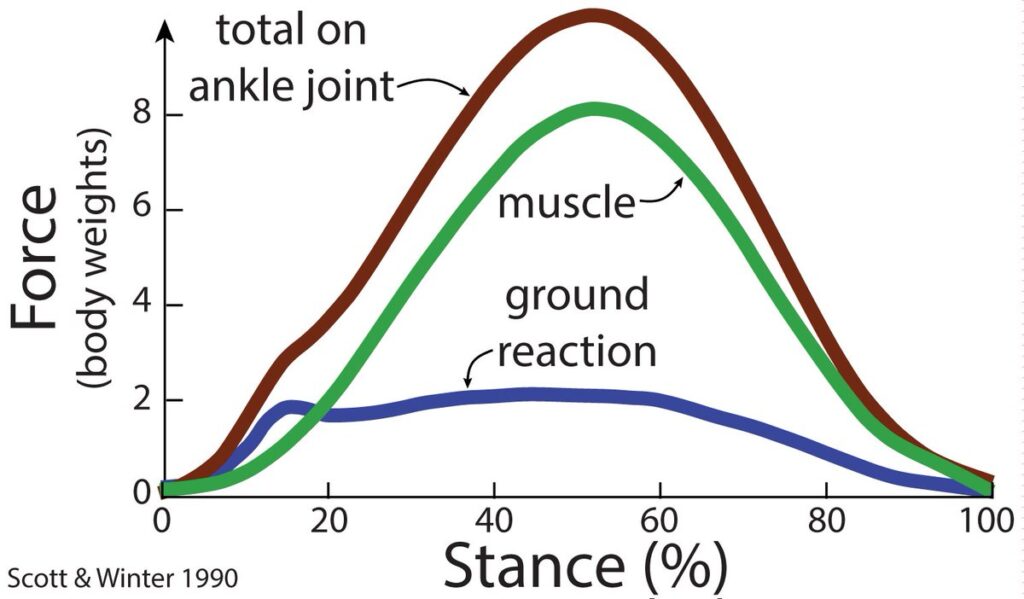
Running can be a very taxing activity on your joints, soft tissue and muscles, especially in your legs. With each step during your run, force is transmitted through your legs that can be 8 times your body weight. Ligaments, tendons, muscles and joints absorb this force, but the repetitive motion of running may cause them to get tired and overused. It is important to be proactive about common areas of running injuries to keep stacking the miles. Continue reading below to learn about some of the best strategies to avoid chronic injury while running.
Training Load
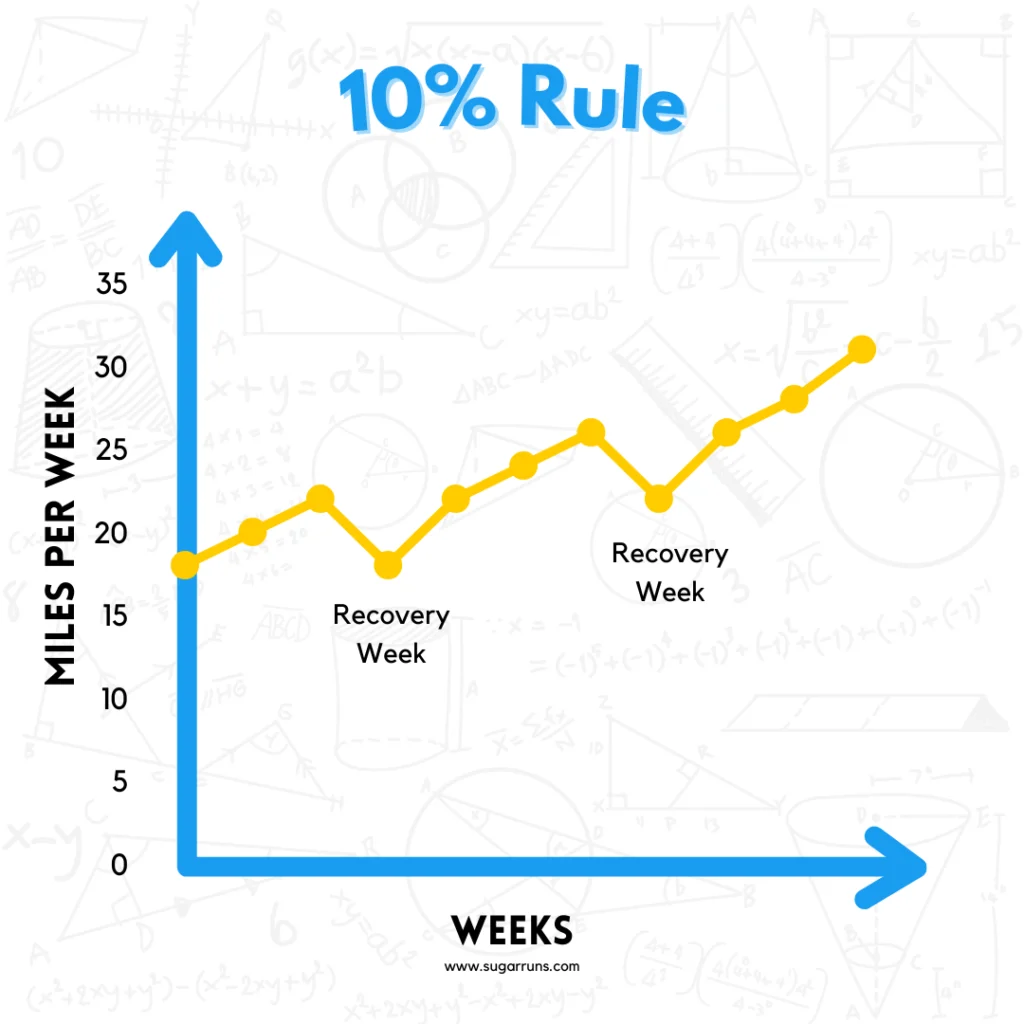
Perfecting your training load is something that many runners find very tricky and when done wrong is one of the most common causes of injury. Many runners fall victim to increasing their intensity or mileage before their tendons, ligaments and joints are ready, leading to injury. Typically the cardiovascular system adapts to the stress of running quicker than soft tissue. A common rule among runners is to only increase your mileage by no greater than 10% weekly. For example, running 10 kilometres one week, the following week increasing it by 1 kilometre to 11 total kilometres. Every 3-4 weeks of increasing mileage must be followed by a consolidation or recovery week where no mileage increase occurs.
In addition to increasing mileage, it is very important to schedule rest days throughout your week. Rest days allow for recovery to soft tissue and helps your muscle, tendons and ligaments adapt to training. Another way to give your tissues a rest while staying active is cross training. Implementing sessions on the elliptical, on a bike or in the pool is a good way to maintain cardiovascular health while giving your tissues a rest from the force of running.
In addition to increasing mileage, it is very important to schedule rest days throughout your week. Rest days allow for recovery to soft tissue and helps your muscle, tendons and ligaments adapt to training. Another way to give your tissues a rest while staying active is cross training. Implementing sessions on the elliptical, on a bike or in the pool is a good way to maintain cardiovascular health while giving your tissues a rest from the force of running.
Mobility is Key to Staying Healthy
With running being a very repetitive activity, tight joints, and muscles can make injuries very common. It is very important that you add mobility exercises to your workout plan to improve range of motion and stay loose. Mobility training does not have to take up your whole week. Many experts agree 15 minute sessions twice per week is enough to decrease injury risk in recreational runners. Here are some examples of mobility exercises that can be completed at home.
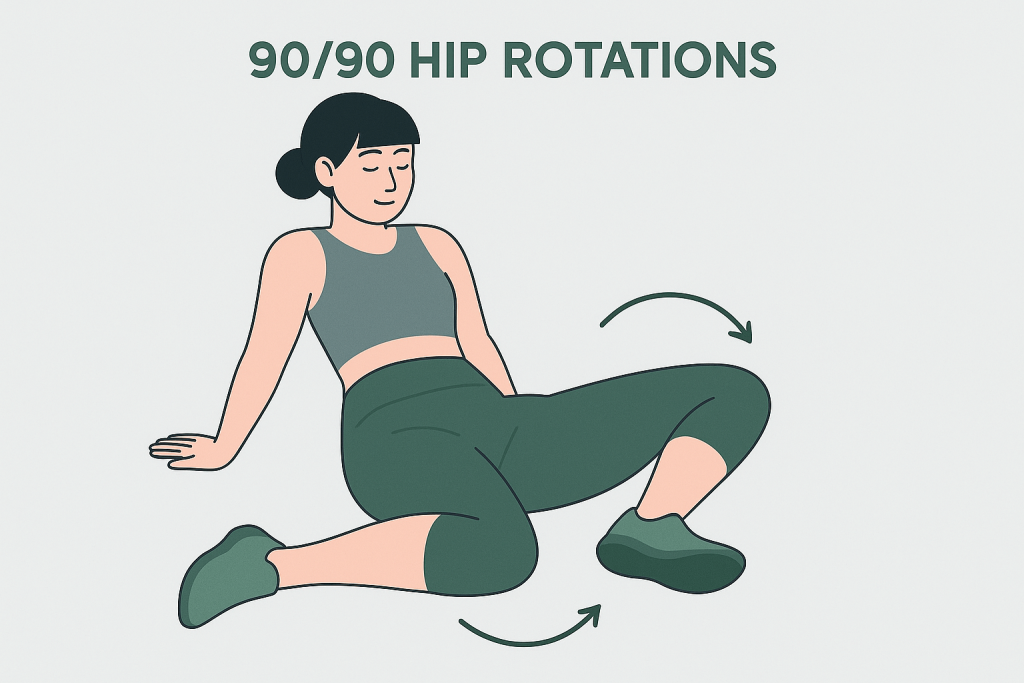
Exercise one: Seated 90-90s are a great exercise to improve hip mobility through internal and external rotation. Maintaining hip mobility decreases the risk of lower back pain by restoring proper pelvic movement.
Check out the steps HERE
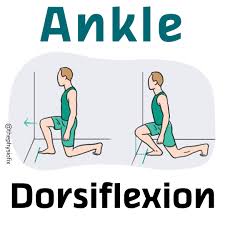
Exercise Two: Knee to wall dorsiflexions can done kneeling like the image or standing, and are a great addition to a mobility program because they help enable proper shock absorption and increase power.
Check out the steps HERE
Mobility exercises go beyond these two. There are plenty of mobility videos online such as 15 Min. Mobility for Runners linked below that will help keep you limber for your future runs.
Strengthening Keeps You Durable
Mobility is not the only modality to keep you feeling 100%, strength training is also very important. Strengthening your tissues does not only translate into more power, but also more durable tissues. Recreational runners who strength train are 85% less likely to suffer a running injury than those who skip strength training. Strength training does not mean training like a body builder, or squatting as heavy as your knees can handle. Small 30-45 minute sessions 2-3 times per week is enough to see the power and durability benefits that will transfer over to your running skills.
Exercise Selection
Exercise selection for strength training should not be about raising heart rate. Modalities of training such as cross fit and high intensity interval strength are poor because these methods may cause extra stress on the cardiovascular system, decreasing your running performance. Focus on heavy load with adequate rest in between sets. Perform your main compound lifts at a rep range of 6 -10 to create an ideal strength workout that will carry over to running. Below are some good examples of strength exercises for runners.
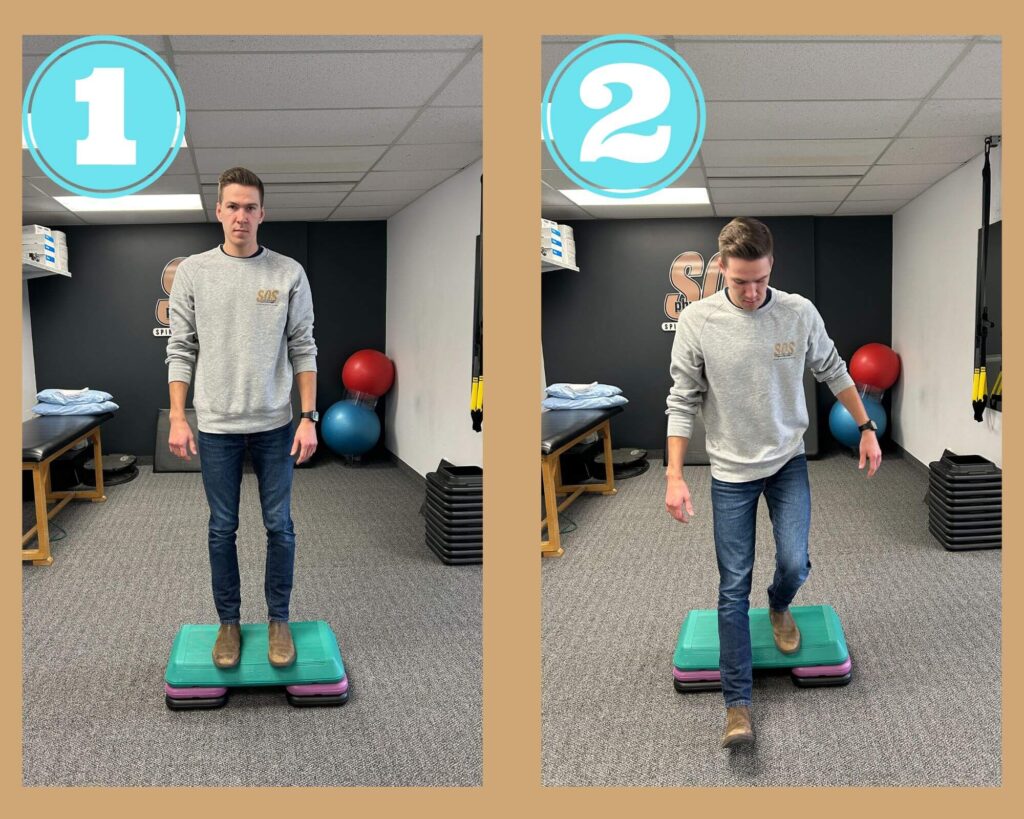
Exercise 1: Anterior step downs are essential for creating bulletproof knees. Start by using body weight and progress by holding dumbbells or kettle bells. Make sure your knee does not deviate inwards or outwards and stays above your 2nd or 3rd toe.
Check out the steps for the anterior step down HERE
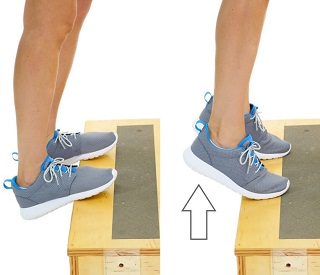
Exercise 2: Standing calf raises are a great exercise for your running and making your ankles more durable. This can be done on the bottom step at home or at your local gym using a machine. Progress this exercise by holding dumbbells, using a smith machine or barbell.
Check out the steps for the standing calf raise HERE
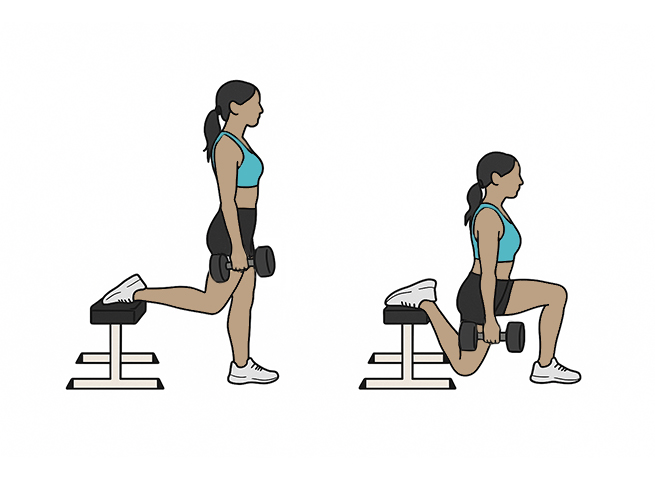
Exercise 3: Bulgarian split squats are a strengthening exercise that will target your glutes, quadriceps and hamstrings. Place your lead foot further from your body to emphasize glutes and closer to your body to emphasize quadriceps. Progress by holding dumbbells in both hands.
Check out the steps for the bulgarian split squat HERE.
When Should you Incorporate Strength into your Running Plan?
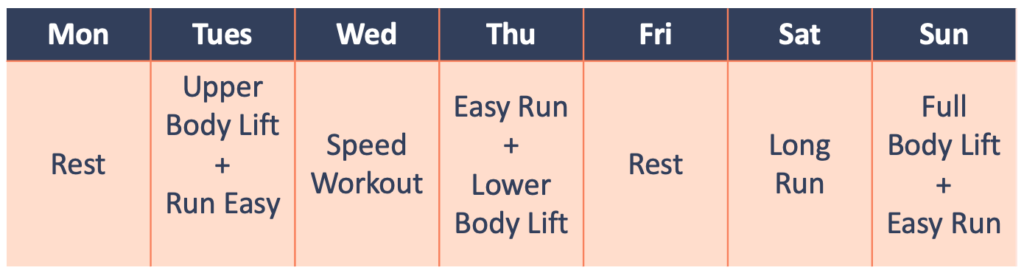
Adding strength to your running plan poses the question on when should it be implemented? In order to maximize recovery strength training on days that you are already running is ideal. It is better to run before doing the strength workout if you are prioritizing speed or endurance to keep the legs fresh. For example, pairing an interval training session in the morning, with a lower body strength workout in the evening is ideal for reaping the benefits of both cardiovascular and strength training while maintaining recovery. It is important to keep the easy days easy and the hard days hard.
Frequently Asked Questions
If I’m new to running how often should I be running? As a beginner it is important to allow for lots of recovery because your tissues are not as used to the stress of running. Running 2-3 times per week is a good start to build consistency and avoid injuries.
What usually causes running injuries? Although no two running shoes are the same, most are caused by similar factors. Worn out shoes (>480kms in most cases), increases in mileage or intensity that are too quick and muscle imbalances are the most common causes of running injuries.
When do I know if my shoes are worn out? When shoes reach 480kms-800kms are finished their lifespan. Other ways to know when it is time for new running shoes is when the shoe feels firmer, have uneven wear and visible creases in the sole of the shoe. Pain is also a common symptom.
How do I warm up for a run to avoid injury? In order to feel good on a run it is important to do dynamic stretching movements rather than static stretches. Example exercises are leg swings, hip circles, ankle circle and a slight walk or march to increase heart rate. The goal is to warm up the muscles and joints before the run so they are ready for the load that running puts on them.