

TENS Machine vs EMS Machine – What are the Benefits?

If you’ve ever wondered about TENS machine or its close counterpart an EMS machine, you’re not alone. Many people have heard about them or might even own one, but are unsure about how to use them effectively or the benefits they offer.
This blog is here to be your go-to guide, breaking down the differences between TENS and EMS machines, and helping you figure out if they’re the right choice for managing your pain. Let’s unravel the basics together and explore how these devices could be the key to enhancing your pain management routine.
TENS Machine
TENS stands for Transcutaneous Electrical Nerve Stimulation. This means it uses electrical currents to stimulate nerves to ease pain. This is done by placing electrode pads at the site of pain. Then the machine sends electrical signals to that area. The electrical signals are able to “confuse” the nerves in the area which prevent the nerves from sending pain signals to the brain. This is used to ease the pain in the area. This is commonly used with people that have chronic pain. Some conditions that this is used for include:

- Arthritis
- Fibromyalgia
- Headaches/Migraines
- Low Back Pain
- Post-Surgical Recovery
EMS Machine
An EMS machine stands for Electronic Muscle Stimulation. It is very similar to a TENS machine since it also uses electrodes and electrical activity, but the goal of the machine is different. The goal of the machine is to help the muscles contract. This is done by using a stronger current and a different electrical frequency to help cause muscle contraction.
Physiotherapists use this modality to help patients perform movements and exercises that the patient may have trouble with. A time when this can be used is after a knee replacement surgery. The patient needs to start bending their knee, but may not be able to since the knee gets very stiff after the surgery. The EMS machine helps to stimulate the muscles around the knee to help bend the knee to increase the range back to a normal amount.
How Does a TENS Machine Work?
How to Use a TENS Machine
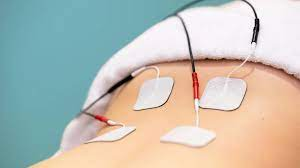
Using a TENS or EMS machine is relatively straightforward. Start by cleaning the area of your skin where you’ll be placing the electrodes with soap and water to ensure good conductivity. Next, attach the electrodes to the skin around the area where you’re experiencing pain, making sure they’re firmly in place.
Once the electrodes are secure, turn on the TENS machine and adjust the settings according to your preferences and guidelines. Begin with a low intensity and gradually increase it until you feel a comfortable tingling sensation without any discomfort. Sit back, relax, and let the TENS machine work its magic as it sends gentle electrical pulses to stimulate your nerve to alleviate pain.
Remember to follow the recommended usage guidelines for your specific device and consult with a healthcare professional if you have any concerns or questions about using a TENS machine safely and effectively.
Long-Term Solution
You may be thinking “Do TENS or EMS machines speed up recovery?”. The simple answer to this would be no, it does not directly speed up recovery. It can be a useful tool to help manage day-to-day pain or to perform certain movements.
A good analogy for these machines is that they are similar to when you stub your toe and rub it. Rubbing your toe does not make it heal faster, but it makes the pain feel more manageable in the moment.
TENS and EMS machines help to manage pain, but should be used alongside physiotherapy and other treatments to help create long-lasting solutions to prevent your problem from constantly affecting you. Click here to book an appointment with one of our physiotherapists.
FAQs
Yes, using TENS and EMS machines is safe. The FDA has tested and approved both. However, users may experience side effects such as skin irritation or a burning sensation if the intensity is too high. If you have a heart condition, pacemaker, skin condition, or are taking medication affecting nerve function and sensitivity, consult your healthcare provider before using.
Each session will last between 15 and 30 minutes. It is recommended to start at 15 minutes and increase the time up to 30 minutes if needed. The machines can also be used multiple times a day, but there should be time between each session to avoid skin irritation.
A TENS machine can have many different settings to adjust. Some of them include frequency, intensity, mode, and duration. These settings will be different dependent on your problem. It is best to research or to ask your healthcare provider which settings would be best for you.
No, you do not need a prescription to get a TENS or EMS machine. A healthcare provider may recommend for you to get a machine, but no prescription is needed to get one.