

From Pain to Productivity: A Guide to a Pain-Free Desk Experience

Are you someone who spends your work day at a desk, sitting for hours on end? Do you start your day pain free, but by the end of the day are feeling stiff and sore? Neck, shoulder and back aches and pains are the most common nagging symptoms that you might be experiencing. Your 9-5 desk job may be the culprit of your pain. Don’t fret! A few simple additions can make your office life more manageable. At SOS Physiotherapy, we are here to help you get back to doing the things you love!
In this blog post, we will delve into the aspects of a desk job that may be creating your pain, and teach you how to curb the pain before it starts!
To learn more on how physiotherapy can help your life at the office, contact SOS Physiotherapy for any questions or concerns you might have.
What is causing your pain at your desk?
The human body is meant to move and be active! Unfortunately, prolonged sitting at a desk can lead to various types of pain and discomfort.
The 3 Big Causes
1. Poor Ergonomics

An office worker will spend most of their day sitting. Therefore, it is important to pick a desk chair that is ergonomically friendly. If you are noticing any pain or discomfort in your neck or low back, have a look at your chair.
As a rule of thumb, the height of the seat should be just below your knees. A chair too high or too low to the ground will move your spine away from neutral position. Sitting in such a position for too long could be causing your pain. Consider using a lumbar support pad to help ensure a neutral spine.
2. Poor Posture
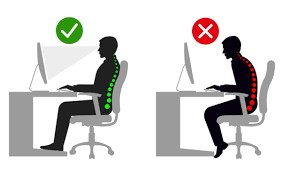
Poor posture while working at your desk is one of the leading causes musculoskeletal pain. As discussed above, when your spine falls out of a neutral position, pain can occur. Slouching, hunching your shoulders forward, or leaning to one side of your chair can all place the spine in an unnatural position. Your physiotherapist can help you to fix your posture by incorporating different strengthening exercises that are designed to retrain your body to adopt a more normal posture at your desk. Read further to learn some helpful tips to improve your posture!
3. Lack of Movement

Sitting for prolonged periods of time can cause various musculoskeletal injuries, as well as contribute to poor circulation, especially in your lower extremities. This can lead to your body aches and fatigue after a long day of work. That is why it is so important to take breaks in your day to get up from your chair and move! Keep reading to learn how to add movement into your busy work day. It is doable and will help you maintain a pain-free life at your desk!
Posture: The Key to Staying Pain-Free at Your Desk
Good posture is critical in keeping your spine properly aligned, and will alleviate back and neck pain. Do you think your posture is poor? If your answer is yes, read further to learn some helpful tips to guide you in improving your posture and stay pain-free at your desk.
- Sit back in the chair. This will ensure that the chair is fully supporting your upper and lower back.
- Keep your feet flat on the floor. Your knees should be at an angle of 90 degrees to keep your hips in a proper position. You may need to adjust the height of your chair depending on your height.
- No slouching! Maintaining a neutral spine is important when trying to reduce back pain. Slouching or hunching forward puts your spine in a curved position, which can put extra strain on your back and cause more pain.
- Relax your shoulders. Avoid any shrugging or hunching. You can adjust the position of the armrests to aid in relaxing your shoulders.
- Keep your neck straight! You can adjust the height of your desktop or use a laptop stand to ensure you can look straight ahead at your computer. This will avoid strain on your neck.
Get Moving!
We all know that exercise is good for us. Regular movement helps to promote health and longevity by strengthening our muscles, improving flexibility, and maintaining joint health, among many other things! You might be thinking to yourself, “but I work a desk job, it is hard to add exercise into my day!”. This is totally valid and you’re not alone! Our physiotherapists can help you develop a personalized stretch program that you can do with ease from your desk!

Tips to incorporate movement into your daily routine at work:
- Take regular breaks to stand up and walk around! We recommend that you take a 5-10 minute break for every hour of sitting.
- Go for a short walk during your break
- Try a standing or treadmill desk
- Do some gentle stretches from your desk chair! Follow along to this stretching program below that you can do right from your desk.
How can physiotherapy help me & what will my treatment look like?
If you’ve been struggling with chronic pain and discomfort, you don’t have to suffer. Our clinicians are here to help treat your pain and discover the root cause so that you can live pain-free at your desk. At SOS Physiotherapy, we are committed to developing strong patient-centred relationships to give you the best treatment possible. If you’ve never had physiotherapy before, it may seem quite daunting. But don’t worry, we’ve created a safe space for you to voice your concerns so we can help you live a healthier life.
A Typical Treatment Plan:

- A 1 hour initial assessment with your physiotherapist to devise your unique treatment plan
- Regular re-visits to the clinic; you’ll find you will be here quite often at the beginning, but this is all part of the process! The goal is to have you feeling better so we can decrease the frequency of your appointments.
- Graduation! When you’ve put in the effort and have stuck to your treatment plan, you’ll get results! At this point, you will continue to monitor your symptoms and keep up with your exercise program, but we are always a call away if you need us!

Treatment for chronic neck, shoulder and back pain related to poor posture from your desk job can include soft tissue release, dry needling or cupping for tight muscles, accompanied by exercises and stretches designed to accompany what we do in the clinic. There are many other treatment modalities that your physiotherapist may choose to treat your unique condition – remember, everyone responds differently! Be sure to communicate with your clinician if you have concerns.
Are you ready to become pain-free?
It is time to take the next step and tackle that chronic pain you have been experiencing throughout your office career! Pain isn’t normal and you should not have to suffer. Still on the fence about whether physiotherapy is for you? Give one of our clinics a call and we would be happy to answer any questions you have, or help you book a Discovery Visit with one of our clinicians! Click here to begin your journey to a pain-free work life!
FAQ’s
Yes! Depending on where you are experiencing your pain or discomfort, your physiotherapist will prescribe various different exercises and stretches to help mitigate your pain. For example, if neck pain is something you want to focus on, there are many great exercises or stretches designed to help your pain in this area.
Your physiotherapist will typically see you a couple of times a week to begin your treatment. In-office treatment combined with being thorough with your home exercise program can have you begin to see pain relief within a few sessions! Remaining pain-free at your desk after your treatment sessions will be greatly dependent on your commitment to your home exercise program.
Physiotherapy is not a one-time fix. It will take some time to begin to see results, and along with your treatment, adherence to your home exercise program is important to ensure success. Ideally, you will be able to decrease the frequency that you are coming for treatment. However, some of our patients come every month for a maintenance treatment to continue feeling pain-free.