

A Taste of Spring
By: Alana Streicher, Physiotherapist Elmira
April is an exciting time of year! We finally shake off the heaviness of winter and begin to notice the first real signs of spring returning around us. The days stretch a little longer, the sun feels a bit warmer, and there is a renewed energy in the air that is hard to ignore. Just the other day I stepped outside to be greeted by the unmistakable smell of damp earth and melting snow. My eyes began to water with the sharp scent of a skunk drifting through the air. Yes, this is spring!
Maybe it’s not the smell of spring that lifts our spirits, but everything else that comes with it—the brighter evenings, the promise of warmer days ahead, and the return of seasonal foods. On the outskirts of Elmira, the roadside stands will soon boast pussy willow branches, fresh asparagus, and maple syrup. There is something especially joyful about the small, familiar markers of the season.
One of my absolute favourite flavours of spring is maple syrup. There is something so nostalgic and distinctly Canadian about the way it adds warmth and sweetness to everything from pancakes to roasted carrots. It is a flavour that feels tied to this time of year.
Recently, I made a batch of maple syrup muffins with my one-year-old. It turned into a messy event. Flour ended up in unexpected places, batter was enthusiastically sampled, and we both came away with sticky fingers and big smiles.
I would love to share this simple, sweet recipe with you so you can bring a little taste of the season into your own kitchen.


How To Find Relief From Sciatica
Frank’s pain was the worst he’d ever felt. It started in his lower back but then radiated down the back of his leg all the way to his toes. Sometimes, he felt numbness or tingling in his leg, which he found especially concerning. But worst of all, this radiating pain made it almost impossible for him to get around.
Eventually, Frank visited his physiotherapist, where he learned this pain had a specific term: sciatica. Its name comes from the fact that it affects the sciatic nerve, which runs from the lower back down into the foot.
Frank also learned that his sciatica, like most people’s, came courtesy of a herniated disc in his lumbar spine. Fortunately, physiotherapy is a frontline treatment for herniated discs, and with a month of regular PT sessions, Frank resolved his pain.
Are you experiencing radiating leg pain like Frank? If so, reach out to us at SOS Physiotherapy. We can help you know for certain if your pain is sciatica or another similar condition — and we can help you find relief with a customized treatment plan.
Call today to schedule your initial consultation!
What Is Sciatica? Symptoms and Causes
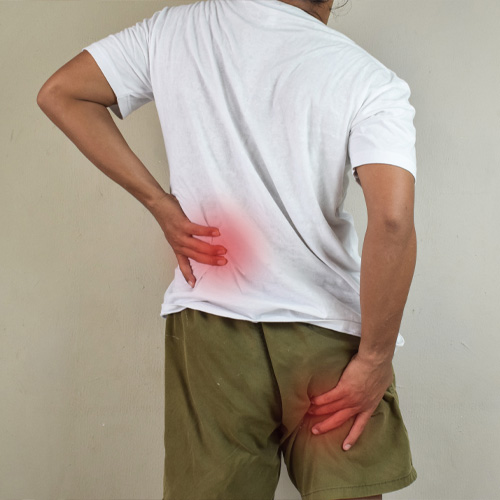
Sciatica is a somewhat misunderstood condition. Many people refer to any radiating pain in the back and legs as “sciatica.” In reality, sciatica only refers to pain that stems from pressure or irritation on the sciatic nerve.
Sciatica’s main symptom is pain that starts in the lower back, radiates into the buttocks, and then runs down the back of one leg into the foot, following the path of the affected sciatic nerve. Often, the leg pain will be worse than the back pain.
However, other symptoms often indicate sciatica, including the following:
- Muscle spasms in the back
- “Pins and needles” sensations in the leg and/or foot
- Numbness in the leg and/or foot
- Shooting or burning pain deep in the buttocks or legs
- Weakness in the affected leg
Sciatica occurs when the sciatic nerve is pinched, compressed, or irritated in some way. But what causes that nerve irritation in the first place?
For most people, as it was for Frank, the answer is a herniated disc. Your spinal vertebrae are cushioned and protected by flexible cartilage discs (spinal discs). If one of these discs bulges or ruptures so that it irritates or pinches the sciatic nerve, you’ll experience sciatica pain.
Other medical issues (such as a bone spur, inflammation related to pregnancy, or a tumor) can also cause sciatica, but these conditions are much rarer. If you have sciatica, the chances are good you have a herniated disc, and that’s something physiotherapy can help resolve!
How Physiotherapy Can Help With Sciatic Pain
When treating a herniated disc (and, by extension, sciatica), our therapists will move through the following steps:
Manage Pain:
We’ll develop a plan to address your acute pain, pulling from several options. Gentle spinal mobilizations, soft tissue manipulation of your back muscles, and pain-relieving modalities such as TENS or hot and cold therapy can all help.
Improve Mobility:
Movement is crucial in addressing sciatica. Spinal mobilizations play an essential role here, allowing you to move the joint without exerting effort. We’ll also incorporate active stretches and mobility work to help ease range of motion restrictions and prepare your body for the next phase of treatment.
Strengthen Your Back and Core:
As your pain lessens, we’ll begin working to build strength in your core muscles, which stabilize and support your spine. By strengthening these muscles, you can alleviate the pressure on your lumbar spine that contributes to sciatic pain and a herniated disc.
Educate to Prevent Future Pain:
Finally, we can provide the tools to prevent a future bout of sciatica. We might help you develop a home exercise program to keep your spine healthy or show you how to properly lift heavy objects to avoid injury.
Find Sciatica Relief at SOS Physiotherapy
Sciatic pain can be incredibly intense and often debilitating. Regular physiotherapy will help you resolve that pain — and the underlying cause — so you can get back to living a full, healthy life.
To get started with your own personalized sciatica treatment plan, call to schedule an appointment today!
In the Community: Pickleball-Related Injuries
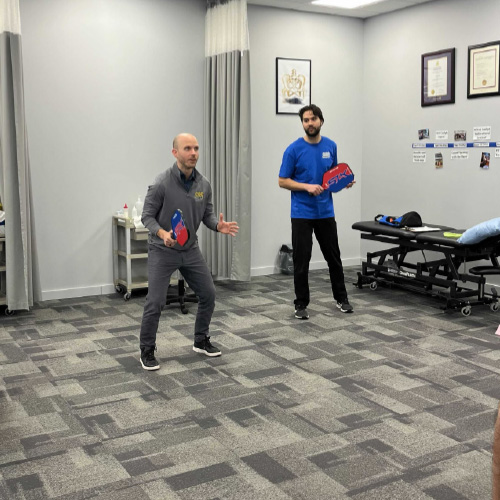

Arthur and Adam hosted a pickleball workshop in Guelph, discussing common pickleball-related injuries and strategies to play pain-free.
Our team attended the Rally for Cancer Pickleball tournament at RIM Park.
Student Life at SOS
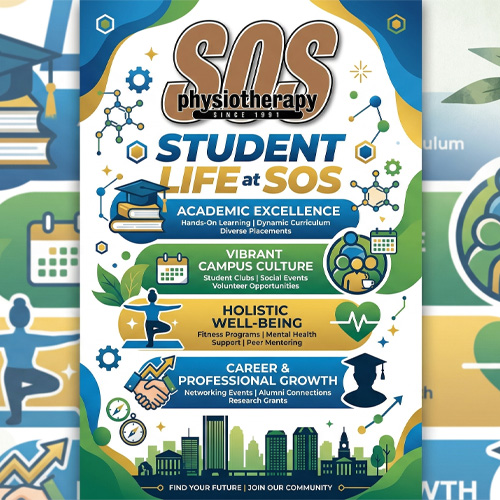
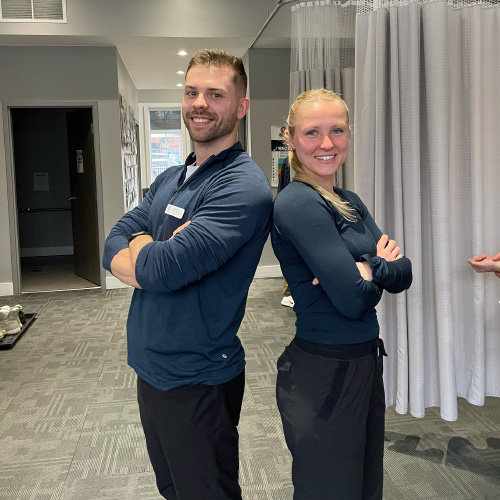
What I’ve really valued about my time at SOS Physiotherapy in Elmira is the emphasis on manual therapy within such a multimodal approach to patient care. The Thursday mentoring sessions bring this to life through case-based discussion followed by high-repetition practice with real-time feedback across multiple bodies.
-Gavin, MPT Student Western University
Being a student at SOS Physiotherapy has truly been an amazing experience! I’ve learned so much and truly appreciate the supportive team around me.
-Jaiden, PTA/OTA Student Conestoga College

Are Tight Hamstrings Contributing to Your Back Pain?
Your hamstrings attach directly to your pelvis, so when they are tight they can pull on the pelvis and increase strain through your lower back. In many cases, hamstrings become tight because they are compensating for weak hip stabilizing muscles. These smaller muscles around the hip provide stability by holding the head of the femur securely in the acetabulum of the pelvis. Most of our daily movement is forward-focused—walking, sitting, driving—which means those stabilizers may gradually weaken.
When that happens, the body adapts. The hamstrings step in to help lift the femur into an optimal position and become overworked in the process. This extra demand can leave them feeling constantly tight, no matter how much you stretch.
Instead of focusing only on stretching, a more effective approach is to strengthen the hip stabilizing muscles. This helps restore balance, reduces the load on the hamstrings, and allows them to return to their primary role of bending the knee and extending the hip.
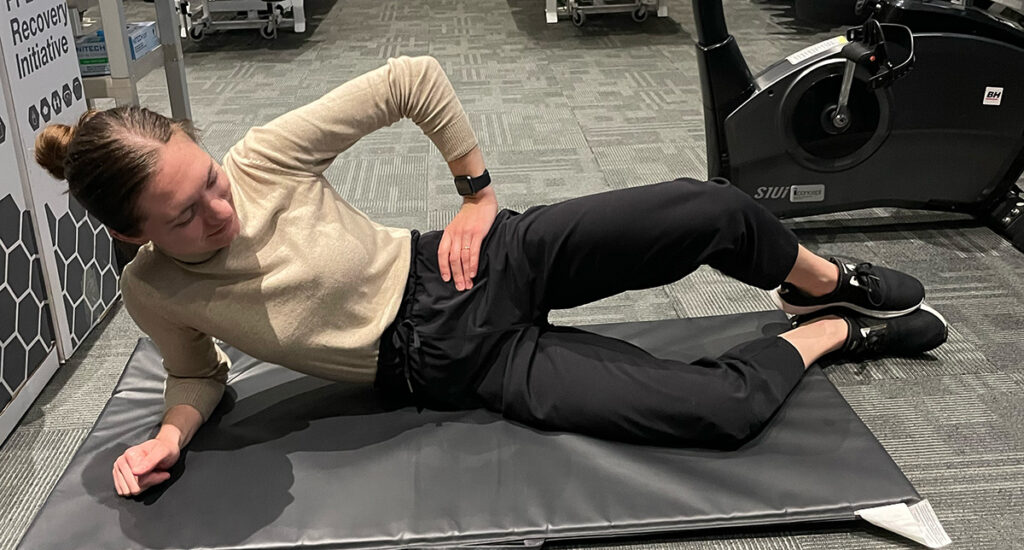
Exercises like clamshells are a great place to start when building hip stability strength. For the best results, speak with your physiotherapist to find out how to modify this exercise for your specific needs.