


By Jill Hubbard, Physiotherapy Resident at our newest SOS Location, Leading Edge

Physio school has a funny way of forming some of the closest relationships in the shortest amounts of time. As you may have heard from your treating clinicians, those bonds often last a lifetime. I was lucky enough to live with four amazing OT students during my time at Queen’s University who are now considered family (which says a lot considering we shared 1.5 baths).
One of these friendships led me to a wedding this past fall in the Yukon. As a frequent traveler, I was excited to see what Northern Canada had to offer as well as celebrate a very special day. Alongside my mom and some classmates, we decided to make a week-long trip to this less-frequented destination. To say we were not disappointed is an understatement.
The Yukon boasts breathtaking scenery, genuinely friendly people, an abundance of opportunities to learn & reflect, as well as spot-on food. Only a roughly five-hour flight from Toronto to Whitehorse, I have been recommending this destination to everyone and anyone since returning home. Some of the incredible activities we got up to included canoeing the Tahkini River, which is along the path of the original gold rush, driving down to Skagway, Alaska, seeing the smallest desert in the world in Carcross, and hiking many mountains!
Although we were a little late in the season, Whitehorse is also famous for some of the most vibrant and frequent sightings of the northern lights, as well as getting up close and personal with wildlife such as bears and moose. If you are up for some hikes, road trips, and craft beer, then the Yukon should definitely be on your bucket list! Its mix of rugged wilderness, cultural history, and small-town charm makes it one of Canada’s most unique and untamed places. It is hard not to be appreciative of how much scenery we have to offer right here in our home country.
This trip also served as a great chance to mark a big milestone, as after six years, it was finally time to transition from being a student to a working professional! I could not have asked for a better group of individuals to start off my career with, and I am happy to be a part of the awesome team here at SOS. Our ownership of the Leading Edge clinic in Kitchener is off to a great start, and I am looking forward to seeing what 2025 has in store for us!

Physiotherapy for Migraines
Getting to the Root of the Problem

If you are one of the 15 percent of the general population that suffers from migraines, you know that the worst part is feeling helpless. Whether you feel helpless when it comes to preventing a migraine or helpless when it comes to treating a migraine, you can’t help but feel enslaved by a condition that causes 91 percent of sufferers to miss work or other daily activities. Fortunately, the solution for migraine management may be simpler than you think.
What is migraine?
According to the American Migraine Foundation, a migraine attack is not considered a headache but a neurological disease. Nearly twice as many women as men are affected by migraines. Attacks are usually characterized by painful throbbing or pulsing on one side of the head, usually accompanied by changes in vision, nausea, vomiting, sensitivity to light, or sensitivity to sound. Migraine attacks usually begin in childhood but can begin during adolescence or early adulthood.
What causes a migraine attack?
One of the most frustrating parts of a migraine is that there is no definitive cause, therefore there is no definitive cure. Some researchers believe that a migraine is caused by changes in the chemicals in the brain that regulate pain. Others feel that problems in the brainstem and its interaction with certain neural pathways cause migraines. Still others believe environmental factors play a role in migraines. Diet, exercise, light, heat, stress, medication, or changes in sleep can all affect whether a person experiences a migraine attack. Other risk factors include age, family history of migraine and hormonal changes due to puberty or menopause.
How is a migraine traditionally treated?
Since there is no definitive cause for migraine attacks, most physicians focus on limiting the duration or severity of a person’s symptoms. Medications are often prescribed that either target a person’s serotonin levels or relieve pain, but stomach problems due to frequent NSAID use or medication overuse sometimes result. Many of these medications are also most effective before a person is in pain. If they react to the warning symptoms that a migraine attack is coming, many times they can avoid the worst of their symptoms.
Physiotherapy Can Help Migraine Sufferers
One of the most promising long-term solutions for chronic migraine sufferers is physiotherapy. One study showed that migraine sufferers who participated regularly in physiotherapy experienced a significant reduction in their symptoms and severity. The improvement did not end with the prescribed course of physiotherapy. In fact, its effect was still felt a year later when migraine sufferers reported a continued reduction in incidence and severity. Best of all, physiotherapy is non-pharmacological and void of the side effects so many other medications carry.
Physiotherapy for Migraine
Traditionally, people think of physiotherapy as a post-surgical or post-accident process designed to improve mobility and balance. While this is an important function, its scope provides a narrow picture of what physiotherapy can do. Physiotherapists are trained to recognize limits to the body’s function and prescribe ways to restore movement, balance, strength, mobility, and harmony of the body’s systems. For instance, some migraine sufferers experience neck and jaw pain that triggers an event. Physiotherapists can recognize the cause of this pain and address it with manual therapies and exercise that, in turn, relieve a person’s symptoms. Even if the cause of a patient’s migraine is undefined, a physiotherapist’s approach is ideal for identifying and addressing the underlying causes that may be contributing to a person’s symptoms.
- Manual Therapies — Physiotherapists will likely perform techniques designed to improve the range of motion in the patient’s neck. This may include joint mobilization techniques, massage, physiotherapy, or pressure point therapy. These manual therapy techniques reduce pain, but they also keep the head and neck moving the way they should. Manual therapies, especially massage, have also been shown to help migraine sufferers sleep better and experience attacks less frequently.
- Exercise — Physiotherapy targeted at migraines may include neck flexion exercises, postural exercises and recommendations for work or school accommodations that may help limit migraine frequency or severity. Additionally, regular aerobic exercise has been shown to reduce tension in the muscles that may be related to migraine symptoms. It can also help a person maintain a healthy weight that is essential to balancing hormone levels that may also contribute to migraines. Physiotherapists are adept at prescribing customized exercise programs for every fitness level.

Contact Our Clinic Today to Make an Appointment
While there is no definitive cure for migraines, physiotherapy is among the most promising ways to manage your symptoms both now and in the future. Drug-free manual therapies coupled with targeted exercise at the hands of a physiotherapist may be the key to managing the frequency, duration and severity of your migraine attacks. The only way to find out if physiotherapy is right for you is to contact us for a consultation. Let us help you get on the road to better management of your migraine symptoms.
FREE In-Person Workshop

“Step Into Comfort”
A Workshop brought to you by SOS Physiotherapy and BioPed Footcare!
Join us on Wed. Feb 26 at 7 pm at our SOS Guelph clinic for an in person workshop dedicated to foot/ankle pain.
Co-hosted by our SOS Physiotherapists Arthur and Coulton
along with Bioped Footcare specialist Meghan.
If you struggle with any kind of foot pain, register to learn more and to save your spot now!
Exercise of the Month
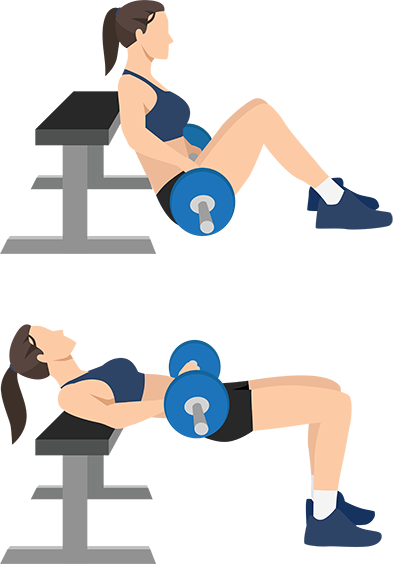
Hip Thrust
One popular exercise right now is the Hip Thrust. It’s been gaining a lot of traction, especially in the fitness and strength training communities. The hip thrust targets the glutes, hamstrings, and core, and it is widely praised for its ability to build glute strength and improve lower body power. People love it because it’s effective, and unlike traditional squats, it places less stress on the lower back, making it a great option for those with back issues.
1. Sit on the floor with your upper back resting against a bench or elevated surface (a bench or box works best).
2. Roll a barbell over your hips (or use body weight if you’re just starting out).
3. Bend your knees, keeping your feet flat on the floor and about hip-width apart.
4. Place your hands on the barbell to hold it steady and avoid it rolling.
5. Push through your heels and thrust your hips upward, squeezing your glutes at the top. Make sure your shoulders and upper back remain on the bench as you lift.
6. Lower your hips back down slowly to the starting position and repeat.

Hip Flexors
A commonly forgotten muscle to focus on is the hip flexors. Many people tend to neglect them in favor of more prominent muscles like the glutes or quads, but strong and flexible hip flexors are crucial for overall lower body function. These muscles play a big role in things like running, walking, and even posture.
The hip flexors (primarily the iliopsoas) are responsible for lifting your knee and flexing your hip, which comes into play with almost every lower-body movement. When they’re weak or tight, it can lead to issues like poor posture, lower back pain, and even inefficient running mechanics. Plus, sitting for long periods (like at a desk or in a car) can shorten these muscles, causing tightness and contributing to discomfort.
Hip Thrusts (Modified for Hip Flexors)
How to do it: Perform regular hip thrusts with a focus on driving through your hips. When you’re at the top of the thrust, emphasize squeezing your glutes and actively engaging your hip flexors to lift your pelvis.
Tip: Keep your core engaged, and avoid overextending your lower back.
Sets/Reps: 3 sets of 12-15 reps
Mountain Climbers
How to do it: Start in a plank position with your hands directly under your shoulders. Drive one knee toward your chest, then quickly switch legs, alternating back and forth.
Tip: Maintain a strong core to prevent your hips from sagging.
Sets/Reps: 3 sets of 20-30 seconds of continuous movement
Continued Education
New and Upcoming
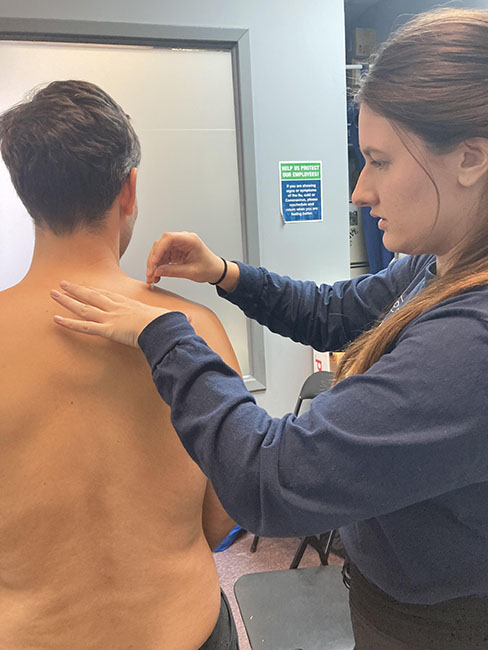
Near the end of January, seven of our newest SOS clinicians headed down to Brampton to become certified in Acupuncture and Dry Needling. It was a jampacked course full of lots of incredible learning opportunities for the team.
For those readers who are unfamiliar with Dry Needling, it is a modern approach to Acupuncture that has been shown to be highly effective for lots of injuries and conditions!
Dry needling can help with pain, tightness, muscle inhibition and more, so talk to your treating clinician if you are interested in receiving this treatment at your next session. No quicker way for our team to build trust than learning where and where not to put needles!


Get Your Paddles Ready To Rally!
SOS was proud to sponsor a pickleball tournament held for a great cause in February. In partnership with Grand River Hospital, RIM Park in Waterloo hosted a pickleball tournament where funds were raised for cancer. We were thrilled to have many of our clinicians and staff members volunteering throughout the day. Thanks to the incredible support from participants and donors, the event raised $10,260 for the University of Waterloo’s UW Well Fit program, directly supporting 16 cancer patients! As most of you already know, we have been fully on board with the pickleball surge that has swept across Ontario. If you know someone who loves to play but is plagued by a bothersome shoulder, elbow etc. reach out to your nearest SOS location or keep an eye out for our frequent pain free pickleball workshops.
Mentoring Corner
Running Resiliency Course
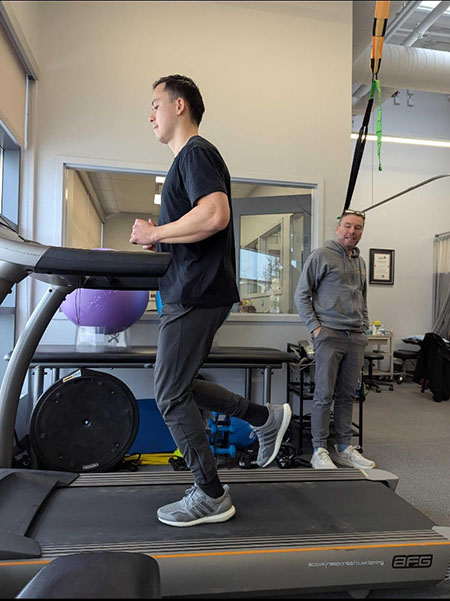
To start off the new year right, some of our clinicians got to attend an in-service course hosted by SOS Northfield with Greg Lehman, PT on all things running. Greg Lehman’s Running Resiliency Course is designed to help clinicians treating runners of all levels improve their movement patterns, prevent injuries, and enhance performance.
Drawing on a blend of biomechanics, strength training, and injury prevention strategies, the course offers a comprehensive approach to understanding how the body moves while running. Participants learn practical techniques to improve their patient’s running efficiency and resilience, all while fostering a more sustainable, injury-free running routine. This offered an awesome opportunity for our team to improve their skills in treating runners, especially as spring is around the corner!