


Kind of a Big Dill
By Coulton Roe – Physiotherapist at SOS Guelph
It’s 2012. I’m sitting in a lecture hall at Laurier, FULLY paying attention during my Sport Management class, when my professor starts talking about this new sport he’s been playing. Pickleball. And I remember thinking, what a RIDICULOUS name for a sport. I mean, who hears “pickleball” and thinks, Yes, that sounds like a serious athletic endeavour?
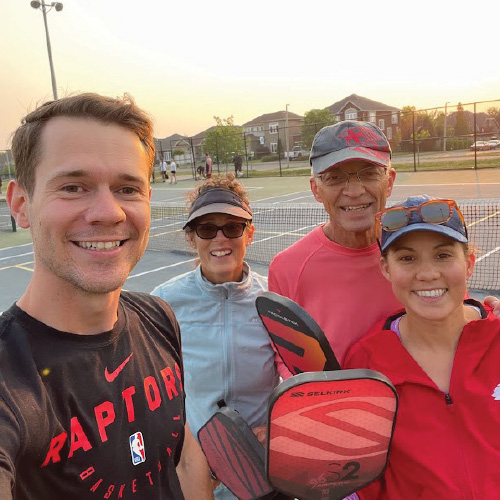
Fast forward about 10 years. I’m meeting my girlfriend’s parents for the first time, and they want to teach us how to play pickleball!!! Oh boy. What have I gotten myself into…
To be fair, I was a good sport about it. I grabbed a paddle, stepped onto the court, and prepared myself for what I assumed would be a leisurely activity involving mostly retirees and very little sweating.
Turns out I was wrong. Very wrong.
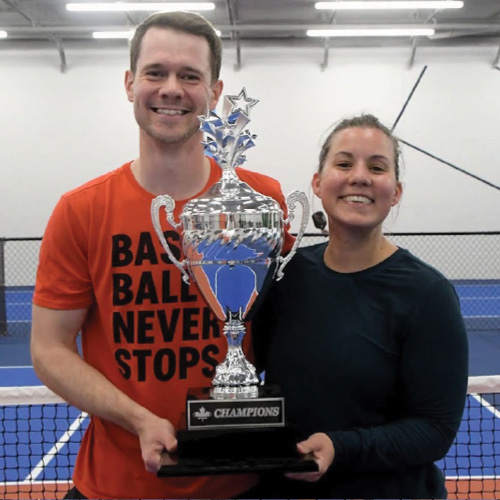
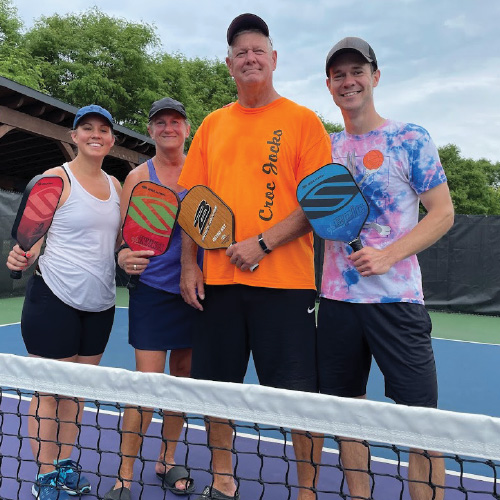
I quickly learned pickleball was not only a great workout, but a game where I can be my super-competitive self with my friends, I can teach my niece and nephew how to rally, or I can get humbled by a duo of 70-year-old women down in Florida (true story). You can have a competitive game with people decades older or younger than you. Complete beginners can jump in and have fun right away, while experienced players can spend hours perfecting strategy and shot placement. It’s one of the few sports where multiple generations can play together and everyone leaves smiling (most of the time).
As a physiotherapist, I can’t help but appreciate the physicality. It enhances your hand-eye coordination, reaction time, balance and stability work, and there’s enough cardio to remind you that maybe you should have skipped that second helping at dinner. But unlike running on a treadmill, you’re too busy having fun – and trying to win – to notice.
And that’s probably the part that hooked me the most: the competition. Every game feels just competitive enough to keep you engaged without taking itself too seriously. There’s something deeply satisfying about a perfectly placed dink shot, or that high arcing lob that lands in the back corner. And nothing beats the long rallies that just keep going and going and going.
It’s also been fun watching pickleball explode in popularity around Guelph. Between the outdoor courts, community programs, and new indoor facilities popping up, it’s clear this is a growing phenomenon. The courts are packed with people of all ages, which is pretty cool to see. My wife and I have even joined a couple leagues, and we’re looking into trying out a tournament or two!
Looking back, I never would have guessed that the sport with the funniest name I’d ever heard would become one of my favourite ways to stay active, connect with family, and scratch that competitive itch.
Turns out my professor was onto something after all.
Staying Active Is the Key to Finding Mental and Physical Balance
Are there times when you feel like life is a bit off? Are you struggling to tell if you think this way physically, mentally or both? Our team of physiotherapists understands the struggles to find balance in your life. SOS Physiotherapy is a place where your overall well-being is prioritized!
Making healthy lifestyle choices leads to improved life satisfaction and lower psychological distress. Exercise and diet, particularly in combination, have the greatest positive benefits for overall well-being.
Whatever choices you make in your life and your values are, there is an undeniable truth: To stay healthy physically and mentally, you must remain active. Exercise benefits a person’s mental health and overall well-being.
The good news is that with guidance from SOS Physiotherapy physiotherapists, you can get help finding your balance again. We believe in treating the whole person and finding solutions that work specifically for you. Call today to make an appointment!
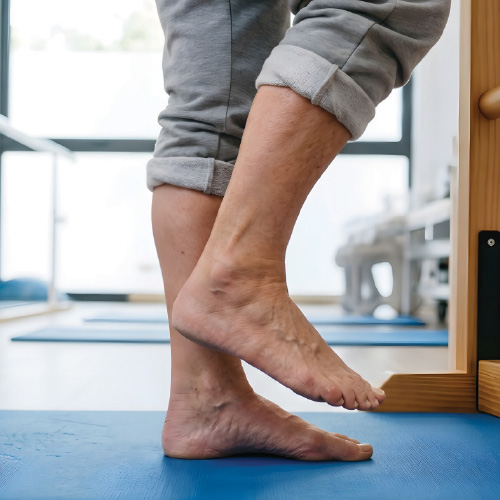
Mental And Physical Balance
Staying active refers to the amount of activity that you engage in daily. For example, how much time you spend at the gym, how many steps you take in a day, how often you find yourself running around the office, or how frequently you head out to the backyard to run around with your children or your dog.
There also can be a perception that working a 10 hour day is necessary to demonstrate a strong work ethic and get ahead. This pace can lead to stress, burnout, and not living a healthy and balanced life. Ignoring your mental and physical well-being will eventually catch up to you and start to take its toll on your health.
Specific signs and symptoms that typically indicate trouble with maintaining balance includes frequently tripping and falling or feeling dizzy when standing too long. But even if you are not having fundamental issues with your ability to stay balanced in this way, you may still have difficulty with whole-body balance.
You can improve your physical balance by:
- Increasing muscle strength
- Improving stamina
- Improving core strength
- Practicing balancing techniques
This is where our physiotherapist can help. We are experts at identifying the root cause of your problem and offering simple solutions to resolve them.
How Physiotherapy Can Help You Keep Your Balance
Here are five steps to help you become physically and mentally healthy while bringing more balance into your life.
1. Exercise
Physical activity has been shown to help clear the mind, improve self-worth, and reduce depressive and anxious feelings. The key is to find the right type of exercise for you – which is precisely what our therapists can help you find!
2. Sleep
Sleep quality is an essential predictor of mental health and well-being. Following a healthy bedtime routine could make you feel happier and calmer and be better focused throughout the day.
3. Nutrition
Cut down on sugary foods and replace them with nutrient-rich foods like fish, veggies, and foods that have healthy fats. Proper nutrition has been shown to improve physical and mental well-being.
4. Community and Relationships
Whether the support comes from family, a partner, friends, coworkers, or even pets, feeling connected to those around you can increase a sense of purpose and love in your life.
5. Relaxation and Recreation
In our busy lives, it can be easy to forget about the hobbies you used to love. We don’t make the time to sit down and enjoy a book or make a cup of tea or coffee and enjoy the moment. Some unique hobbies and interests appeal to each of us, and spending time with those hobbies can help you live a more balanced life.
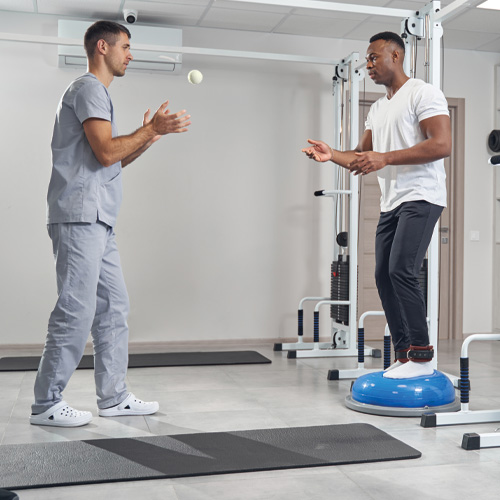
Contact Our Clinic Today
Contact us if you feel that your physical health or an old injury is holding you back from being active. Working with our physiotherapists at SOS Physiotherapy can help you achieve improved balance and a healthy lifestyle.
Here FORE the Kids!

SOS Physiotherapy was happy to be part of the Waterloo Regional Police Association Golf Tournament at Rebel Creek Golf Club this July in support of KidsAbility. Our team was on-site throughout the day, connecting with golfers, sharing information about our services, and supporting an event that helps make a positive impact in our community.
We always enjoy opportunities to get out into the community, meet new faces, and support organizations doing important work. A big thank you to the Waterloo Regional Police Association for hosting another great event, and to everyone who participated in support of KidsAbility.




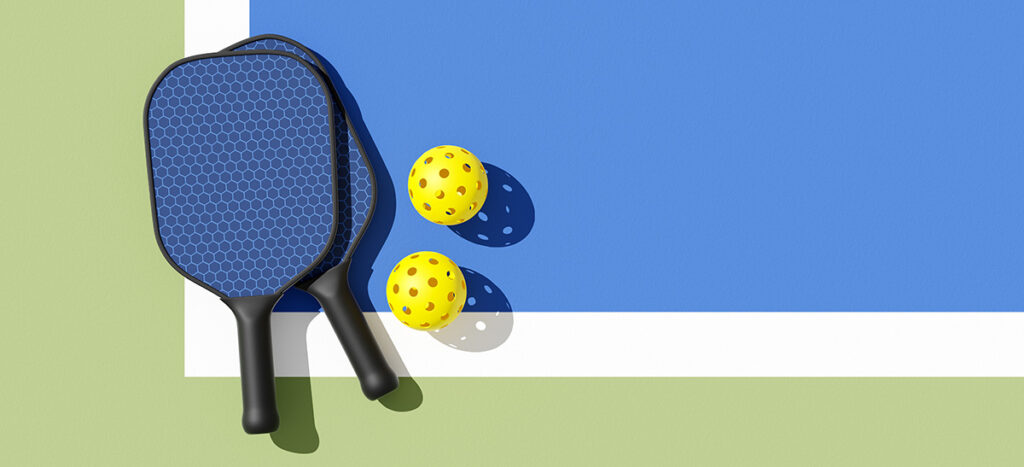
The Do’s and Don’ts of Pickleball
DO: Arrive 5-10 minutes early and warm up with some light movement and easy rallies.
DON’T: Show up right on time and jump straight into a competitive game.
DO: Turn and run for a well-placed lob—or call on your partner to cover it.
DON’T: Backpedal to chase the ball. Falls, collisions, and calf injuries often happen this way.
DO: Wear proper court shoes with good grip and lateral support.
DON’T: Play in running shoes. They’re designed for forward movement, not quick side-to-side changes.

Pickleball 101: The Basics
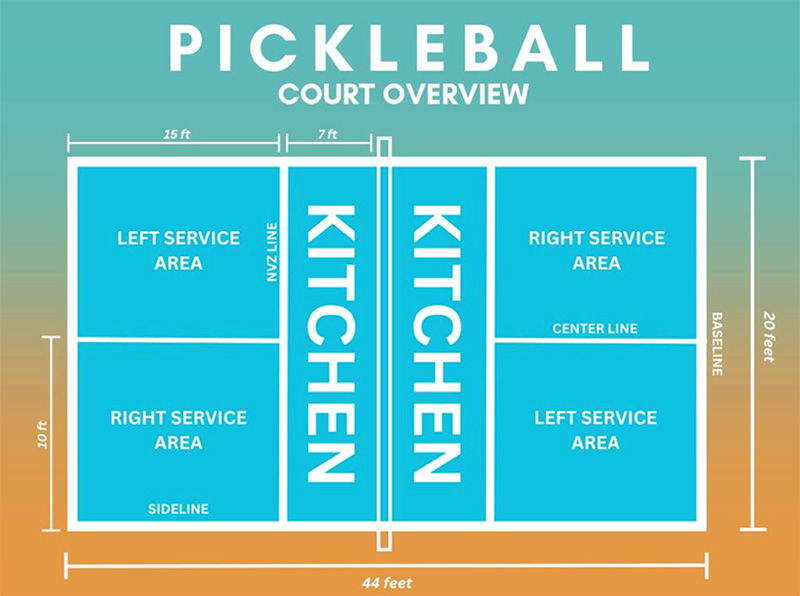
If you’ve never played pickleball before, think of it as a mix between tennis, badminton, and ping pong. It’s played on a court about one-quarter the size of a tennis court, using a paddle and a lightweight plastic ball with holes.
Games can be played as singles (1 vs. 1) or doubles (2 vs. 2), with doubles being the most common.
Here are the basics:
The Serve
The serve is hit underhand and must travel diagonally across the court. The ball has to clear the non-volley zone (better known as “the kitchen”).
The Double-Bounce Rule
After the serve, the receiving team must let the ball bounce once before returning it. Then the serving team must also let it bounce once before hitting it. After those two bounces, players can either volley (hit it before it bounces) or play it off the bounce.
The Kitchen
The 7-foot area beside the net is called the kitchen. Players can’t volley while standing in the kitchen, which helps prevent giant tennis-style smashes at the net.
Scoring
Only the serving team can score points. Most recreational games are played to 11 points, and you must win by 2.
Why People Love It
It’s easy to learn, quick to pick up, and can be as recreational or competitive as you want it to be. A first-time player can rally within minutes, while experienced players can spend years mastering strategy and shot placement.
*Warning*:
What starts as “I’ll just try it once” has a habit of turning into a paddle collection and a search for court time.