
From the Rockies to the Badlands: Our Alberta Road Trip
By Alicia Cole, a Registered Physiotherapist at our SOS Belmont Location
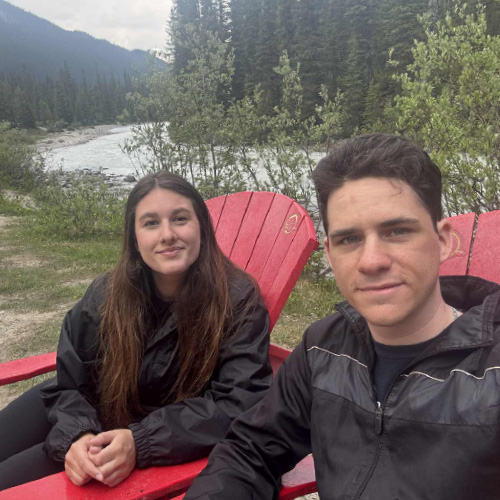
This past June, my partner and I set off on a road trip to celebrate a major milestone — his graduation from medical school and the start of his residency. With a big transition ahead, we wanted to take some time to relax, explore, and enjoy Alberta’s natural beauty before life got busy again.
We spent the first half of the trip in Canmore, using it as our home base for day trips into Banff and Yoho National Parks. Waking up in Canmore each day was truly amazing. It had all the beautiful mountain views of Banff but with a quieter, more relaxed feel. Each morning, we grabbed a coffee, packed snacks, and set out for the day.
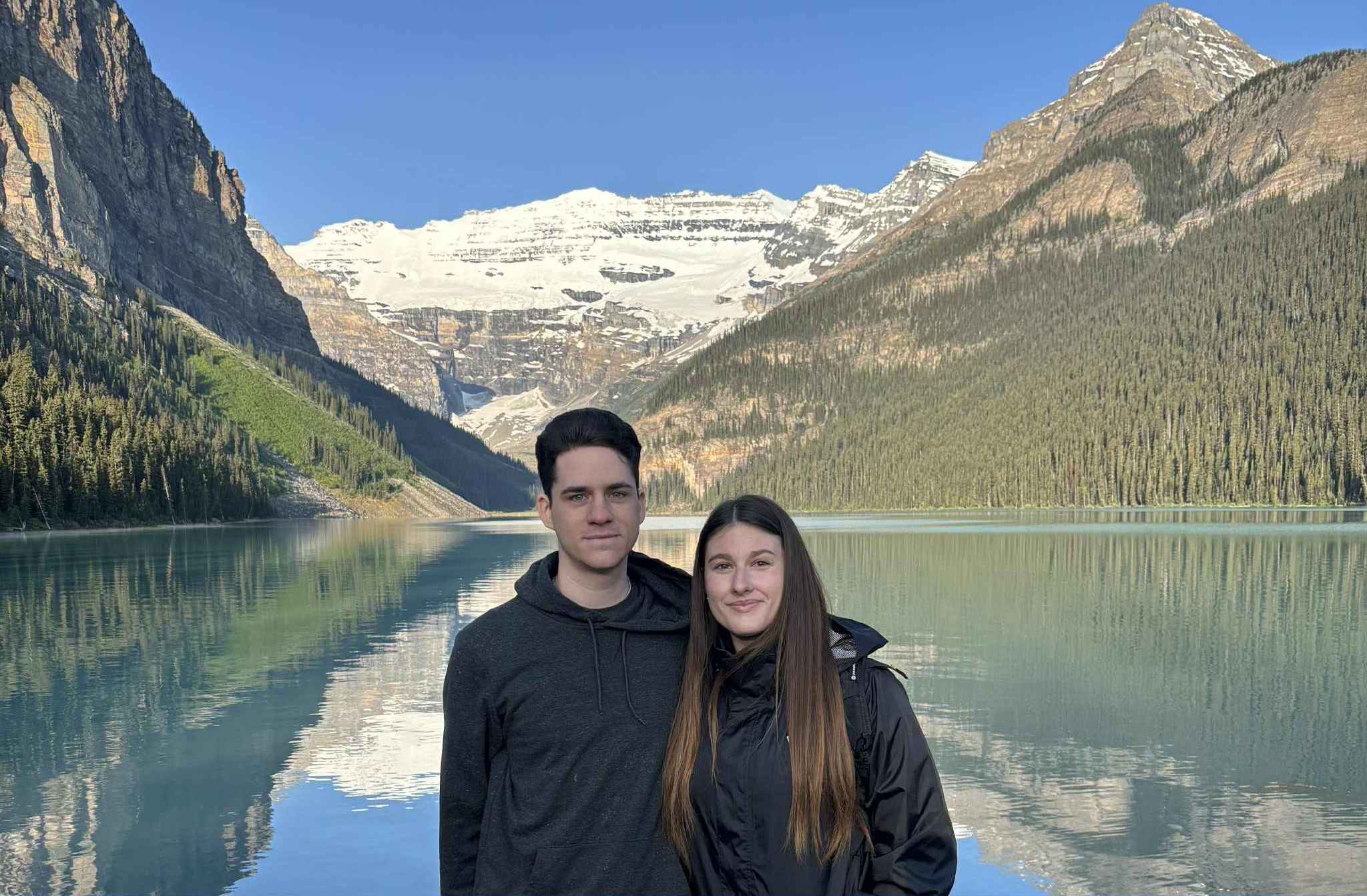
Our first big outing was to Lake Louise. We woke up at 5 am and arrived extra early to see the mountains reflected in the water, which was an absolutely breathtaking sight! That day turned into a hiking marathon. We completed the trails to the Lake Agnes Tea House, Big Beehive, and the Plain of Six Glaciers, covering about 25 km. Needless to say, we were exhausted by the end! We rewarded ourselves with a soak in the Banff hot springs and some downtime with mountain views.
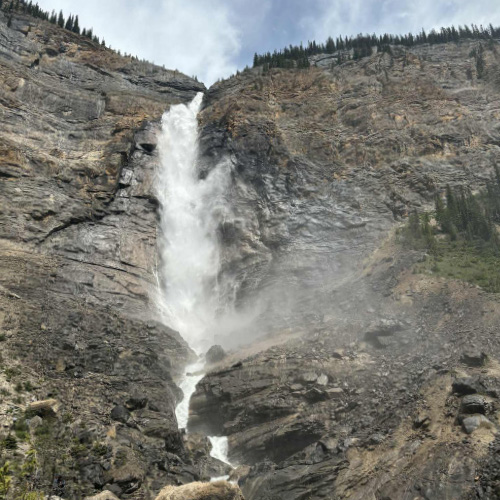
The next day, we drove into Yoho National Park in British Columbia. Here we started with Emerald Lake, where we got a chance to do some more hiking, visit some little waterfalls and we even stumbled across some paragliders! Following this, we drove out to Takakkaw Falls and Peyto Lake, which had some of the bluest water I had ever seen. Yoho Park was less busy than Banff, and the peaceful surroundings gave us a chance to slow down and take everything in. To finish off the day, we stopped into Banff and got some dinner at the Spaghetti Factory.
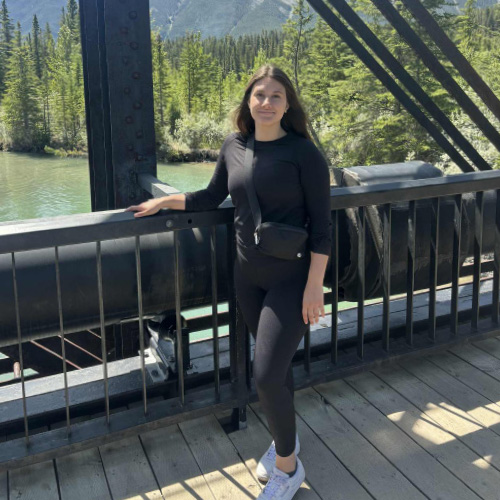
In our final days in Canmore, we visited Johnston Canyon, Lake Minnewanka, Grassi Lakes, and the Canmore Engine Bridge. We also made plenty of scenic stops along the highway, at the many lookouts that Alberta has to offer. At each stop we couldn’t help but be amazed at all of the incredible views. To end off our time in Canmore, we did some souvenir shopping and stopped in for some Beavertails.
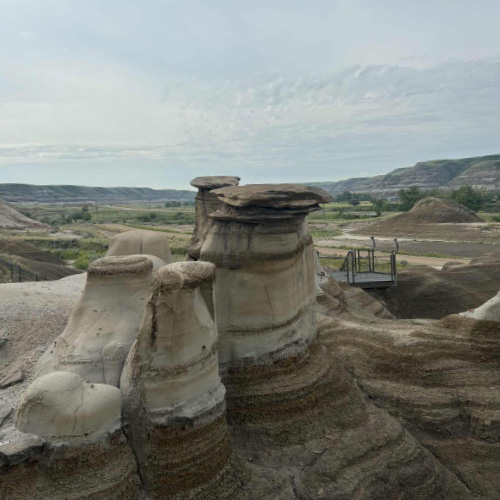
For the last two days of our trip, we stayed in Calgary and took a day trip to Drumheller. The change in scenery — from alpine peaks to the hoodoos of the badlands — was stunning. We hiked the area and explored the Royal Tyrrell Museum. We both agreed that we could have stayed at the museum for hours. There was so much to see there, including real fossils that had been excavated from the area, and so much interesting history to learn about!
This getaway was more than just a vacation — it was a chance to reset, celebrate, and reflect before a new chapter begins. Safe to say we will be returning to the Canadian Rockies for future vacations!

Back Pain Slowing You Down?
Physiotherapy Can Help!
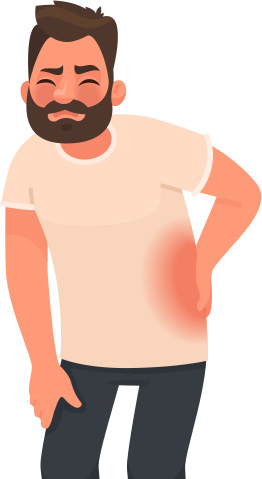
Here’s a fact about back pain that may bring you some comfort: it’s one of the most common musculoskeletal complaints in the world. Around 80% of people will have back pain at least once. So, if you’re suffering now, you probably aren’t the only one!
Of course, that thought does little to help if your back pain keeps you from performing day-to-day activities — as it often does. Back pain is often accompanied by mobility restrictions that make walking, rising from sitting, or bending over difficult. And if left untreated, it can sometimes lead to long-term pain and dysfunction.
At SOS Physiotherapy, we know how debilitating back pain can be. Our team of dedicated physiotherapists will help you understand the cause or causes of your back pain and work with you to develop a personalized treatment plan that will let you get back to the activities you love to do.
Call our clinic today to set up your initial consultation!
What Causes Back Pain?
Here are some of the more common sources of back pain that we see at our clinic:
- Strains and Sprains: A strain occurs when you injure the muscles in your back. A sprain occurs when you injure the ligaments that link your spinal vertebrae. Both can cause pain and limited mobility, and they often result from lifting with improper form (such as twisting while lifting) or attempting to lift something too heavy.
- Herniated Discs: Soft, flexible discs separate and cushion your spinal vertebrae. If one of those discs herniates — that is protrudes out — and irritates a nearby nerve, it can lead to intense pain, feeling “stuck” in a stooped over position, and often pain down the leg known as sciatica.
- Osteoarthritis: Osteoarthritis is the most common form of arthritis in the world, occurring when the cartilage and bone tissue in a joint degenerate and become inflamed. While we often associate it with the hips, knees, or hands, it can occur in the spine, too. Spinal osteoarthritis is sometimes called spondylosis.
- Lifestyle Factors: Several factors can contribute to lower back pain, including improper posture, prolonged sitting, or weakness in the muscles that wrap and support your spine (your core muscles).
Why Physiotherapy at SOS Physiotherapy Is Your Back Pain Solution
While back pain often resolves on its own within 1-3 months, physiotherapy is an excellent choice for people with particularly intense pain or extremely restrictive mobility. It’s also useful for people with chronic back pain — defined as pain that lingers past that three-month mark.
We customize all our back pain treatment plans according to your specific needs: the location and severity of your back pain, any mobility restrictions, your ability level, and overall goals. We’ll work to address the underlying issues causing your pain rather than simply masking the symptoms.
How will we do this? Through a blend of the following techniques:
- Manual therapy helps manage pain, promote blood circulation, and improve mobility.
- A personalized therapeutic exercise plan improves the strength, flexibility, and endurance of your back and core muscles. Muscle weakness significantly contributes to lower back pain, so exercise is a must.
- Specialized training, such as proper techniques and activities that simulate functional movements you’ll need to perform (i.e., squats, lunges, lifting, etc.).
- Prevention strategies help reduce future back pain incidents. These strategies might include postural corrections or suggestions for at-home exercises, such as a walking program or regular strength and mobility practice.
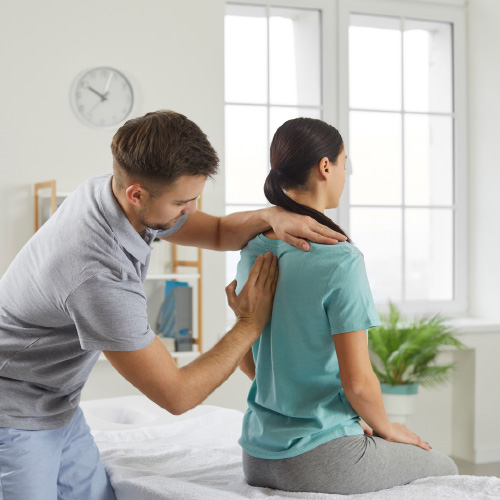
Get Moving Again with Physiotherapy!
Back pain is more than just pain. It can severely restrict your mobility, leading to less exercise and movement, further contributing to pain and dysfunction. The SOS Physiotherapy team is here to help you break that cycle and find relief from back pain for good.
Call us today to schedule an appointment!
Clinic Golf Outing at Badlands Golf Course
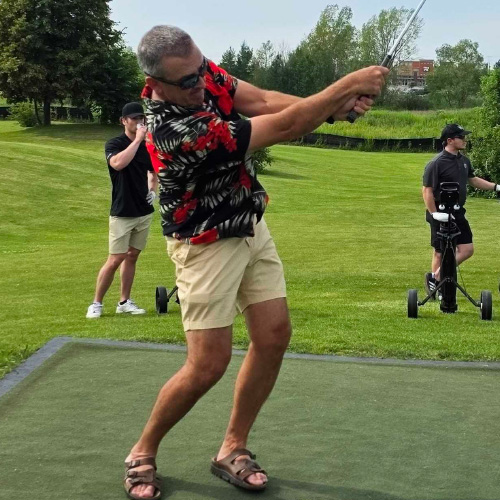
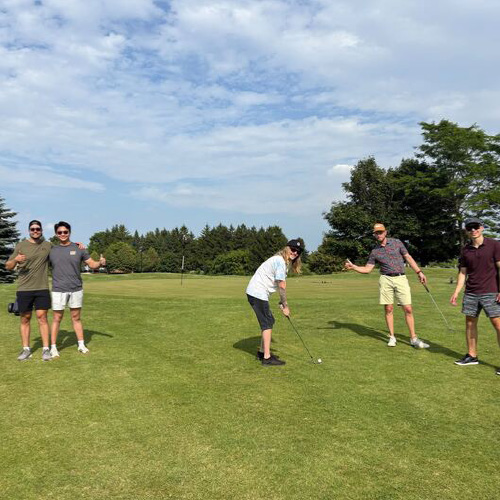
This past July, our clinic teams from across all locations wrapped up the week a bit early and met up for a fun afternoon at Badlands Golf Course in Waterloo. We headed out to enjoy some time outside the clinic, soaking up the sun and fresh air on a beautiful day. We split into small groups, which gave us a great opportunity to catch up with colleagues we don’t often see from other clinics. We all had such a good time chatting and catching up with each other as we made our way through all 9 holes.
After we wrapped up on the course, we settled in on the patio for some tacos and continued our conversations off the green. It was a great way to unwind and build connections across our different clinics. This annual tradition continues to be a highlight of the year, and we’re already looking forward to our next big get-together!
Student Life at SOS: Co-Op Student Connor
Hi, my name is Connor, and I’m entering my fifth and final year of the Honours Kinesiology Co-op Program at the University of Waterloo. Over the past eight months, I’ve had the opportunity to complete my final two co-op terms with the SOS Physiotherapy team at their Belmont location. This experience has given me valuable insight into all aspects of the physiotherapy field—from managing front desk responsibilities to shadowing and assisting physiotherapists in the clinic. It has allowed me to gain a well-rounded understanding of what it takes to run a successful organization like SOS.
This placement has been a significant stepping stone in my career, allowing me to apply the knowledge I’ve acquired throughout my studies in a real-world clinical setting and see how it translates into practice. I’ve also had the privilege of working alongside a team of supportive, knowledgeable professionals who have helped me expand my understanding well beyond the classroom.
Outside of school and the clinic, I enjoy staying active by going to the gym and playing a variety of sports, including hockey, golf, volleyball, and basketball. I also love spending time outdoors—whether it’s relaxing at the cottage or fishing with my dad and friends.
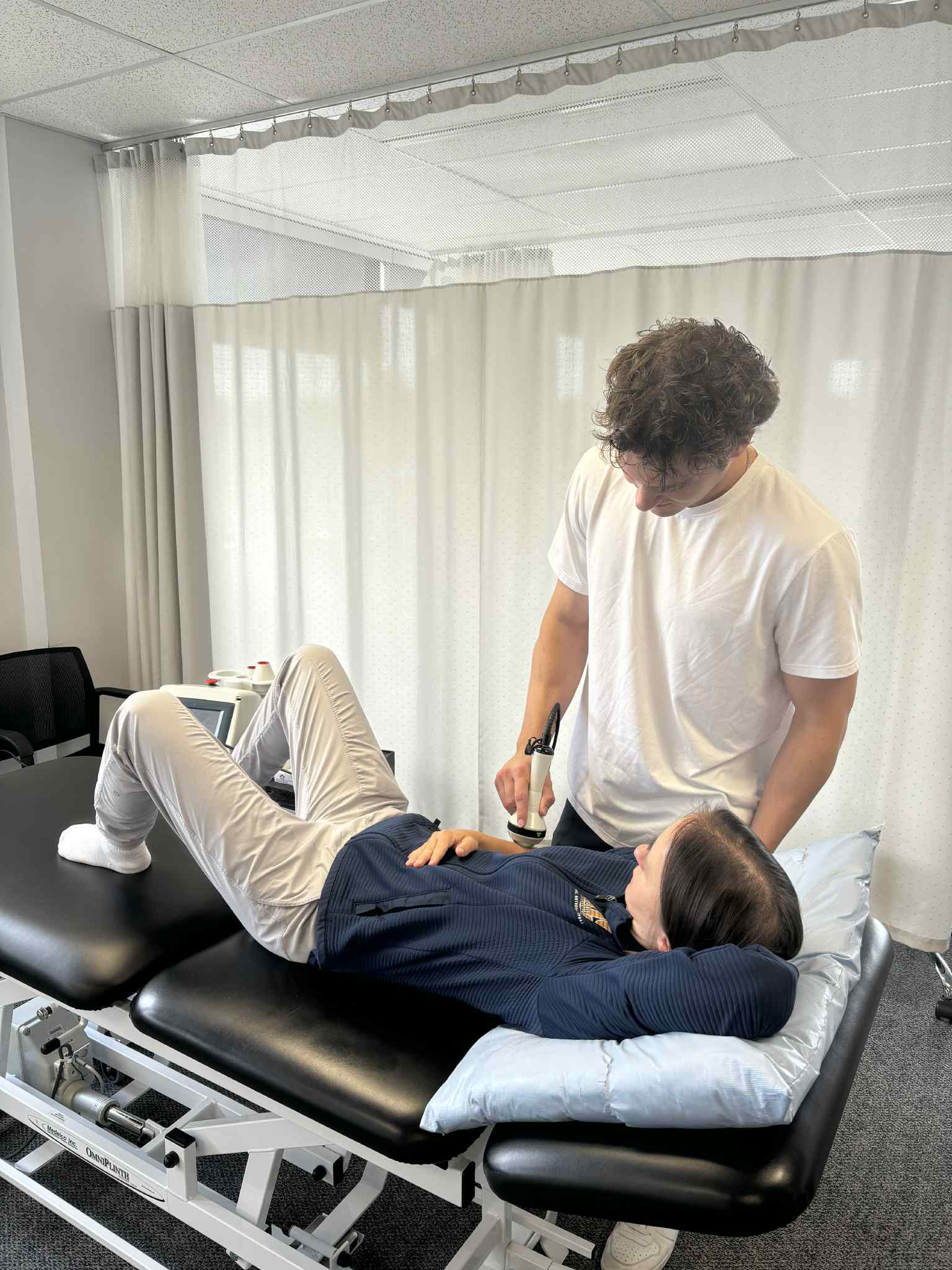

Commonly Forgotten Muscle: Gluteus Medius
What is it?
The gluteus medius is one of the most underrated muscles in the body—yet it plays a major role in balance, stability, and injury prevention. If you’re dealing with hip, back, or even knee issues, this could be the muscle that needs your attention!
Where is it?
The gluteus medius is located on the outside of the hip/buttock just below the hip bone and lies underneath the gluteus maximus.
What does it do?
The gluteus medius is responsible for:
- Hip abduction (moving the leg out to the side)
- Hip internal rotation (rotating the hip inwards)
- Pelvic stability during walking, running, and standing on one leg
- Controlling hip and knee alignment, especially during dynamic movements
It’s especially active during single-leg weight-bearing activities and helps prevent hip drop (also known as a positive Trendelenburg sign).
Signs you should target it:
- Hip, lower back, or knee pain—especially on one side
- Your hips drop or shift during walking, running, or stair climbing
- Difficulty balancing on one leg
- Recurrent IT band tightness or knee tracking issues
Try These Exercises
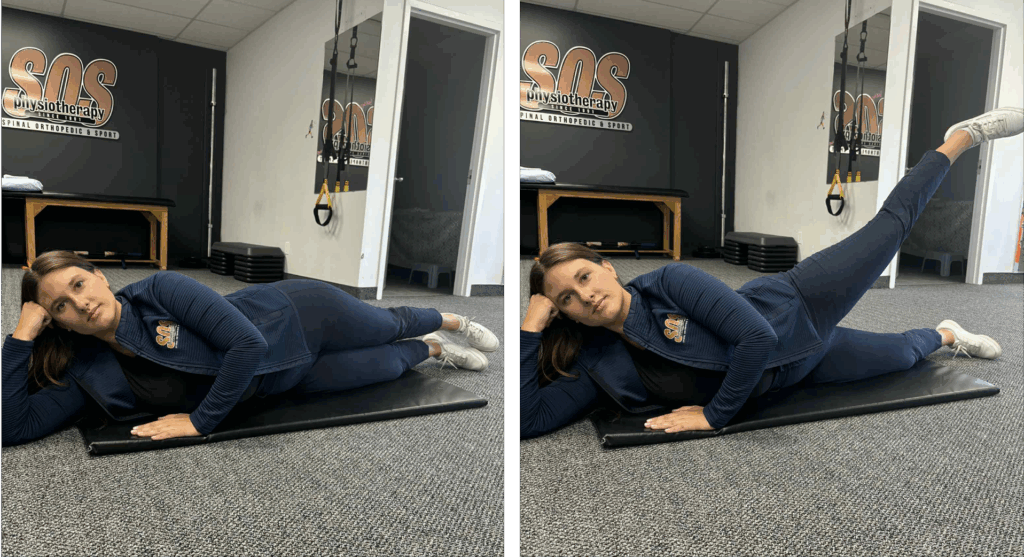
Side lying hip abduction
How to do it: start by lying on your side with your bottom arm supporting your head and your legs extended straight. Your hips should be stacked. Keeping your top leg straight and toes slightly pointed down, slowly lift the leg upward to about 45–60 degrees. Focus on using your outer hip rather than your lower back or quads. Pause at the top for a second, then lower the leg with control. Keep your core engaged throughout to maintain alignment. For added difficulty, you can use a resistance band around your thighs or ankles
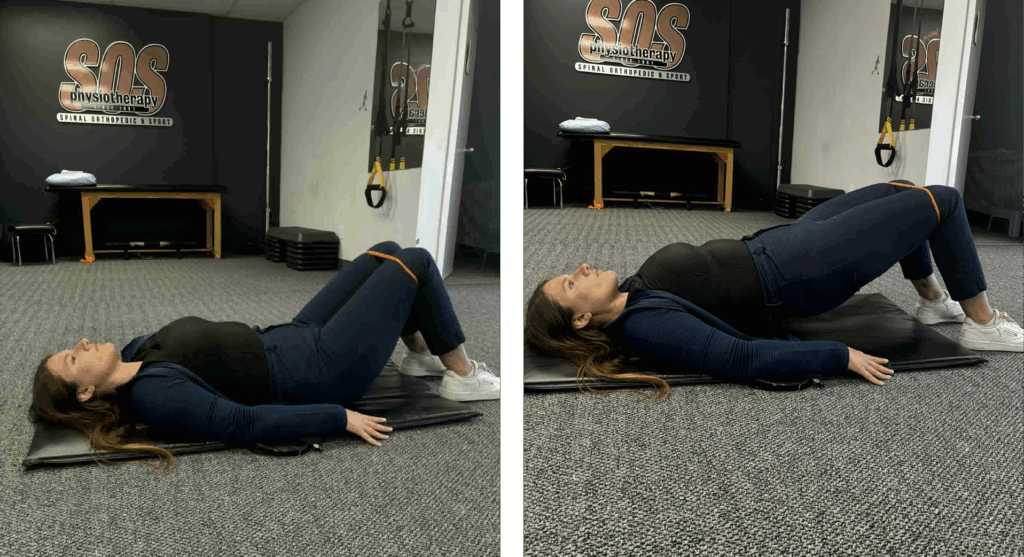
Glute Bridge with band
How to do it: lie on your back with your knees bent and feet flat on the floor, about hip-width apart. Place a resistance band just above your knees to create tension. Keep your arms relaxed at your sides. Engage your core and press through your heels to lift your hips toward the ceiling, squeezing your glutes at the top. At the same time, push your knees slightly outward against the band to activate the gluteus medius. Pause briefly at the top, then lower your hips back to the ground in a controlled motion. Avoid overarching your back or letting your knees collapse inward

This September, we’re thrilled to celebrate two exciting anniversaries with our SOS community!
Elmira – 10th Anniversary
Join us on Thursday, September 12th for a drop-in style celebration! From 9 AM-12 PM, enjoy coffee and treats, then stick around from 12-3 PM for a parking lot BBQ with free burgers and hot dogs. Plus, don’t miss your chance to enter our draw for gift cards to some favourite local hot spots!
Northfield – 5th Anniversary
On Thursday, September 19th, swing by Northfield for our drop-in party! We’ll have sweet treats, refreshments, and a prize wheel loaded with SOS swag for you to spin and win.

Exercise Essentials – Thread the Needle
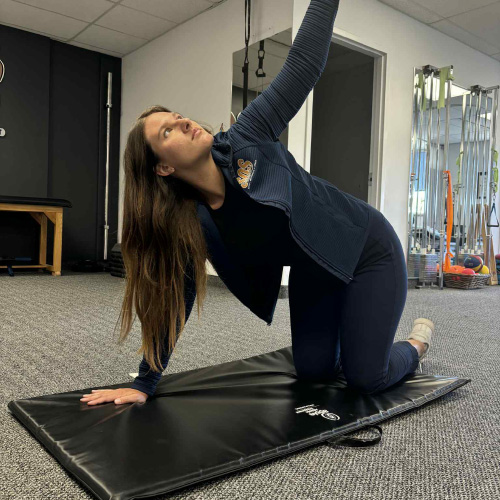
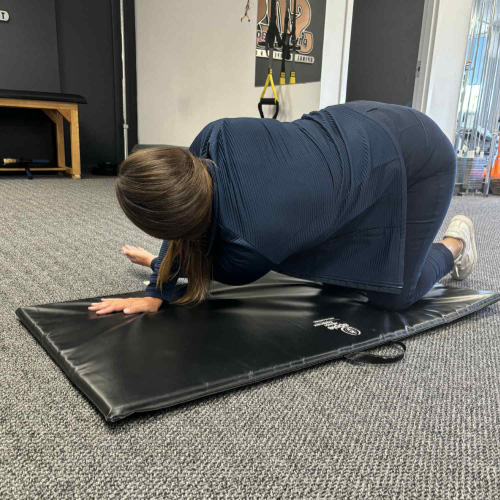
Why “Thread the Needle” is a Great Exercise for Your Spine and Shoulders
Thread the Needle is a simple but highly effective mobility exercise that targets the upper back, shoulders, and neck. It’s especially helpful for anyone experiencing stiffness from prolonged sitting or working in positions that lead to rounded posture. This gentle twist encourages spinal rotation and extension, relieves tension, and can improve flexibility through the shoulders and upper back. It can be used as part of a warm-up, cool-down, or daily movement routine and is a great way to support healthy movement and posture.
How to do Thread the Needle:
- Start on your hands and knees in a tabletop position. Your wrists should be under your shoulders, and your knees under your hips.
- Inhale and reach your right arm underneath your left arm, allowing your torso to follow the movement.
- Lower your right shoulder and the side of your head gently to the floor, or as close as is comfortable.
- Hold this position for 3–5 deep breaths, feeling the stretch through your upper back and shoulder.
- Exhale as you sweep your right arm back out and up toward the ceiling, following with your gaze.
- Return to your starting position
- Repeat on the other side.